My upgraded Zwift setup

My new setup for indoor bike training using the Zwift app:

I got the Wattbike Atom about a year and a half ago when the first generation was released. While it is more expensive than a premium Turbo trainer such as the Wahoo Kickr, it takes up less space and can be left set up all the time. I do not have to worry about the wear on my bike too. Replicating my road bike position was quick and easy as Wattbike provide a calculator to support this, but it has never really worked with my TT bike, and I am still struggling to get a position that feels similar. I was getting pain in my left glute when I was using it a lot, but a change of saddle fixed that. Other than that the Wattbike is excellent, I have never had an issue with it and works perfectly in erg mode.

The Apple TV device worked seamlessly on the first try, and the bigger screen does make a difference to the experience compared to using my older 13′ Macbook air. My laptop is relatively old and had struggled with Zwift in the last month, so I wanted a cheaper alternative than replacing my computer. The Zwift website suggests using an Apple TV device, so I follow the advice. I completed a two-hour ride, including climbing alpe du Zwift and following a session imported from my Training peaks programme and set on erg mode. I did not have any dropouts of the connection with the Wattbike even though there were over 10,000 people on the map, and many were doing the same climb. The Apple TV rendered Watopia and the other riders well, and I had no disappearing riders or glitches in the scenery.

I am currently riding on Zwift every day and wanted an easy set up that meant I only had to think about getting on the bike with no messing around. It is not a cheap set up, but it is worth the money and I get a lot of use. I am lucky to have space in the conservatory to have it up at all times. I would highly recommend the Apple TV 4K for Zwift if you need an alternative to your current devices. Now, I need to use it. 

If you have any questions, contact me on Twitter.

A reminder of the UN Sustainable Development Goals

The UN launched the Sustainable Development Agenda in 2015, providing a blueprint for peace and prosperity, agreed by all UN member states. The Sustainable Development Goals (SDGs) are the evolution of the UN Millennium Development Goals (MDGs) launched in 2000 to reduce global poverty by 2015. The idea is that lasting and meaningful change in eradicating poverty and deprivation requires improving health and education, reducing inequality, encouraging economic growth, and tackling climate change while preserving oceans and forests.

The UN department of economic and Social Affairs list 169 different targets collected under seventeen goals:

Goal 1. End poverty in all its forms everywhere

Goal 2. End hunger, achieve food security and improved nutrition and promote sustainable agriculture

Goal 3. Ensure healthy lives and promote well-being for all at all ages

Goal 4. Ensure inclusive and equitable quality education and promote lifelong learning opportunities for all

Goal 5. Achieve gender equality and empower all women and girls

Goal 6. Ensure availability and sustainable management of water and sanitation for all

Goal 7. Ensure access to affordable, reliable, sustainable and modern energy for all

Goal 8. Promote sustained, inclusive and sustainable economic growth, full and productive employment and decent work for all

Goal 9. Build resilient infrastructure, promote inclusive and sustainable industrialization and foster innovation

Goal 10. Reduce inequality within and among countries

Goal 11. Make cities and human settlements inclusive, safe, resilient and sustainable

Goal 12. Ensure sustainable consumption and production patterns

Goal 13. Take urgent action to combat climate change and its impacts*

Goal 14. Conserve and sustainably use the oceans, seas and marine resources for sustainable development

Goal 15. Protect, restore and promote sustainable use of terrestrial ecosystems, sustainably manage forests, combat desertification, and halt and reverse land degradation and halt biodiversity loss

Goal 16. Promote peaceful and inclusive societies for sustainable development, provide access to justice for all and build effective, accountable and inclusive institutions at all levels

Goal 17. Strengthen the means of implementation and revitalize the global partnership for sustainable development

UN Sustainable Development Goals

Each of the goals is broken down into specific targets. For example, Goal four, Quality education is split into ten targets.

Goal 4. Ensure inclusive and equitable quality education and promote lifelong learning opportunities for all

4.1 By 2030, ensure that all girls and boys complete free, equitable and quality primary and secondary education leading to relevant and effective learning outcomes

4.2 By 2030, ensure that all girls and boys have access to quality early childhood development, care and pre-primary education so that they are ready for primary education

4.3 By 2030, ensure equal access for all women and men to affordable and quality technical, vocational and tertiary education, including university

4.4 By 2030, substantially increase the number of youth and adults who have relevant skills, including technical and vocational skills, for employment, decent jobs and entrepreneurship

4.5 By 2030, eliminate gender disparities in education and ensure equal access to all levels of education and vocational training for the vulnerable, including persons with disabilities, indigenous peoples and children in vulnerable situations

4.6 By 2030, ensure that all youth and a substantial proportion of adults, both men and women, achieve literacy and numeracy

4.7 By 2030, ensure that all learners acquire the knowledge and skills needed to promote sustainable development, including, among others, through education for sustainable development and sustainable lifestyles, human rights, gender equality, promotion of a culture of peace and non-violence, global citizenship and appreciation of cultural diversity and of culture’s contribution to sustainable development

4.a Build and upgrade education facilities that are child, disability and gender sensitive and provide safe, non-violent, inclusive and effective learning environments for all

4.b By 2020, substantially expand globally the number of scholarships available to developing countries, in particular least developed countries, small island developing States and African countries, for enrolment in higher education, including vocational training and information and communications technology, technical, engineering and scientific programmes, in developed countries and other developing countries

4.c By 2030, substantially increase the supply of qualified teachers, including through international cooperation for teacher training in developing countries, especially least developed countries and small island developing States

Quality Education Targets

Each Target then has its own set of indicators. For example, Goal 4.3 covering technical, vocational and tertiary education, including university, has one indicator:

4.3.1 Participation rate of youth and adults in formal and non-formal education and training in the previous 12 months, by sex

The UK government has a website dedicated to the SDGs that provides data on how the UK measures each indicator. Looking at the example above, 10% of adults had participated in formal or non-formal learning in the last 12 months in 2016—participation rates by sex 11.2% for females and 9.6% for males. 

I would highly recommend you spend a little time this weekend reviewing the SDGS website and looking at the overviews of the goals that specifically interest you. Each goal has overview and progress sections that cover the implications of Covid-19 on the progress towards the targets.

Let me know what you think about the goals, targets, and progress on Twitter. How do we extend remote learning to more students?

How to interact with people on Twitter

I miss interacting with people. Twitter has people. I will use Twitter to interact with people.

I asked the marketing guru that is my wife for some guidance. Roma suggested I comment on at least five posts per day for the next three weeks using hashtags related to my field. After three weeks, after I am a part of the community, I should then share something that I have been working on that they would value.

I did a bit of a search and found some additional tips

  1. Sort out my profile
  2. Tweet more
  3. Connect with people I already know
  4. Join a regular Twitter chat
  5. Follow and engage with more people in my industry
  6. Learn from Twitter accounts I thing are awesome

Sort out my profile: Your profile is searchable, and people look at it before they interact with you, so make it useful. Get a clear, close up photo of your face, use the full 160 characters for your bio, and complete all the fields including your location. 

Tweet more: The best way to grow your Twitter circle is to get people following you to retweet things you post. To do this, you need to tweet consistently with useful things. People who tween more have a larger circle, and so you can use tools such as Tweet deck to schedule tweets ahead of busy times. Use one or two hashtags to increase the visibility of your tweets so people can find you. Stay up to date with topics in your field and tweet about it and include links.

Connect with people you already know: Find and follow people you already know through work and other social networks. You can import your email contacts to your Twitter account to speed this up. Adding your Twitter account to your email signature can also encourage people to find you outside of work as you interact with new contacts.

Get involved with Twitter chats: People meet regularly on Twitter for gatherings using various hashtags. Roma has one called the #5amteacher or something similar when crazy people get up early and talk to each other.

Follow and engage with more people in my industry: Follow the authors of the tweets you are commenting on and individuals that are visible within your industry. Search hashtags to find the people that have similar interests as you, follow them and start to interact with their posts. You can also find great people to follow by viewing who the people you follow are following.

Learn from Twitter accounts you think are awesome: Find Twitter accounts with large followings and lots of interaction, learn how they post, interact with comments, and layout their profiles. Check if they have a blog post or a video on Youtube about how they use Twitter.

Another Challenge

I will update my profile, and then for the next three weeks, I will follow Roma’s advice and comment on at least five tweets per day. When I gave a few minutes, I will also find people I know and people in my industry to follow and interact with. I will watch Ali Abdaal’s youtube video on ‘How Twitter Changed my Life.’

Find me on Twitter and let me know what awesome things you are working on.

Are we ten years from the brink?

I listened to the book ’10 years to midnight’ by Blair Sheppard on today’s Turbo session. The author introduces the ADAPT framework to explain how the western civilisation is ten years away from the brink of collapse. ADAPT is an acronym for asymmetry, disruption, age, polarisation, and trust.

Asymmetry – increasing wealth disparity and the erosion of the middle class

Disruption – the pervasive nature of technology and its impact on individuals, society, and the climate

Age – demographic pressure on business, social institutions, and economies

Polarisation – Breakdown in global consensus and a fracturing world, with growth in nationalism and populism

Trust – Declining confidence in the institutions that underpin society

We have heard many negative headlines in the press since the IPPC Climate change report said we had 12 years to save the planet. These headlines usually tie in other social and economic emergency claims into these 12 years too. Fueled by my newfound distrust in the media institution that underpins society, I was curious about how real these things are in the UK, so I searched for some reliable data. 

I decided to look at the first topic of the framework, asymmetry. Two elements where mentioned, the first was, increasing wealth disparity, and the second was the middle-class’s erosion. The first result I got when I googled ‘UK erosion of middle class’ was a Guardian article titled ‘The demise of the middle classes is toxifying British politics…’ I did not click through to get the full title.

Wealth disparity

The Office for national statistics released two reports in July 2020 that looked helpful, the first was Household average income, and the second was analysis on household income inequality. The key findings of these papers:

Household average income

  • In financial year ending (FYE) 2020, the period leading up to the implementation of measures against the coronavirus (COVID-19), average household disposable income (after taxes and benefits) was £30,800 – up 2.3% (£700) compared with FYE 2019, after accounting for inflation.
  • Over FYE 2020, real earnings increased by an average of 1.5%, however more recently total annual pay growth for March to May 2020 fell by 1.3%, after accounting for inflation, which will likely impact adversely on income growth rates in FYE 2021
  • The increase in median income in FYE 2020 continues an upward trend seen since FYE 2013, where average household income increased by an average of 2.1% per year.

Household inequality

  • Income inequality, as measured using the Gini coefficient, has been broadly stable over the past ten years with disposable income (post direct taxes and cash benefits) reaching 34.6% in financial year ending (FYE) 2020 after peaking at 38.6% in FYE 2008 just prior to the economic downturn; however, the Gini coefficient is 6.1 percentage points higher than average levels throughout the late 1970s and 1980s.
  • Across all measures, however, there has been a slight increase in income inequality since FYE 2017. The Gini coefficient has increased* from 33.4% to 34.6%, while the S80/S20 ratio shows an increase from 5.2 to 6.1. This mainly reflects a fall in disposable income in for the poorest 20% of people between FYE 2018 and FYE 

So the general picture before March was that the median income was improving after tax and benefits. There has been some movement for inequality, but practically over the last ten years, it has been ‘stable’. A caveat, while these numbers have been corrected for inflation, they do not consider changes in the cost of living or large regional differences, but that is a subject for another investigation and another post.

Erosion of the middle class

Middle class: a social group that consists of well-educated people, such as doctors, lawyers, and teachers, who have good jobs and are not poor, but are not very rich. Cambridge English dictionary

The easiest way to get data on the middle class is by income, although most definitions, such as the one I have used, include education level and cultural elements. 

The OECD report from 2019 defines middle-income as an income of 75% to 200% of the median income. The report states that a middle-income group in the UK is 58% of the ‘slightly smaller’ population than the OECD average of 61%. Still, the UK has a greater percentage (11% vs the average of 9%) in the upper-income classification (>200% of median), and a smaller percentage in the Poor classification (0-50% of median).

The report also states that the UK has fewer middle-income jobs (and upper and lower-income jobs) at risk of automation than the OECD average, 12% and 18%, and fewer middle-income people (35%) have difficulty making ends meet in the UK that the OECD average (47%).

According to the Office for national statistics, the UK’s median income is £29,600, making middle income between £22,200 and £59,200. There is a dramatic difference in the financial opportunities for people on the bottom of that scale to those at the top, but if you earn £22,200 per year, you are considered middle class by many economists. 

Can we trust the doomsday calls?

A quick search and a focus on the UK only show a very similar picture to the one ten years ago. This search is a five-minute sense check and by no means exhaustive and is not making light of how tough it can be to live on the lower ends of the scale, particuarly with a family. Still, it is enough to start believing the declining confidence in institutions such as our media and politicians who make their living through clickbait. I am keen to get further thought the book and start to investigate the claims made. 

The Coursera quality metrics

 I came across these quality metrics from Coursera in some reading today and thought it was interesting.

Components of quality metrics definitions

Engagement (Completion rate): The proportion of completion-eligible learners who complete courses and items

Satisfaction (Rate of 5-star reviews): The proportion of star ratings – given by course completers – that are a perfect five stars. This metric captures more variability than average star ratings.

Skill development (Average score Delta): The average increase in skill scores, demonstrated in graded assignments, and projects in the course.

Career outcomes (Rate of career benefit): The proportion of completers, responding to our survey, who report receiving career benefits from the course.

Coursera

In the paper  Great online learning outcomes happen by design, Coursera states that ‘completion rates among most populations of learners are substantially higher than 50% and can be far higher in courses that adhere to Coursera pedagogy best practises‘. For student satisfaction, they state, ‘The average star rating across courses on Coursera is 4.7 out of 5 stars’. Career outcomes are at 73% of the responding students claiming a positive job-related outcome. 

The engagement and satisfaction numbers are far lower than what we would see in a good university course. This is before you take into acocunt that satisfaction scores at universities are usually taken mid-year and include students that will not complete, whereas Coursera only asks completers. However, it is worth noting that these numbers are a dramatic improvement from the early days of MOOCs when 15% completion rates were not unheard of and where satisfaction was low. What is more impressive is that Coursera is operating at scale, with 70 million students, making up nearly 200 million online enrollments on over 4000 courses provided by around 200 different universities.

These improvements are down to investment from Coursera and other MOOCs in delivery models and quality. It is worth watching these large providers with their massive data sets, intense focus on the student experience, and lower costs. Perhaps the MOOC might deliver the promise that people initially hoped they would provide.   

Read the full paper, Great online learning outcomes happen by design, on Coursera’s website.

Is your health worth 1% of your day?

Photo by Karl Solano on Pexels.com

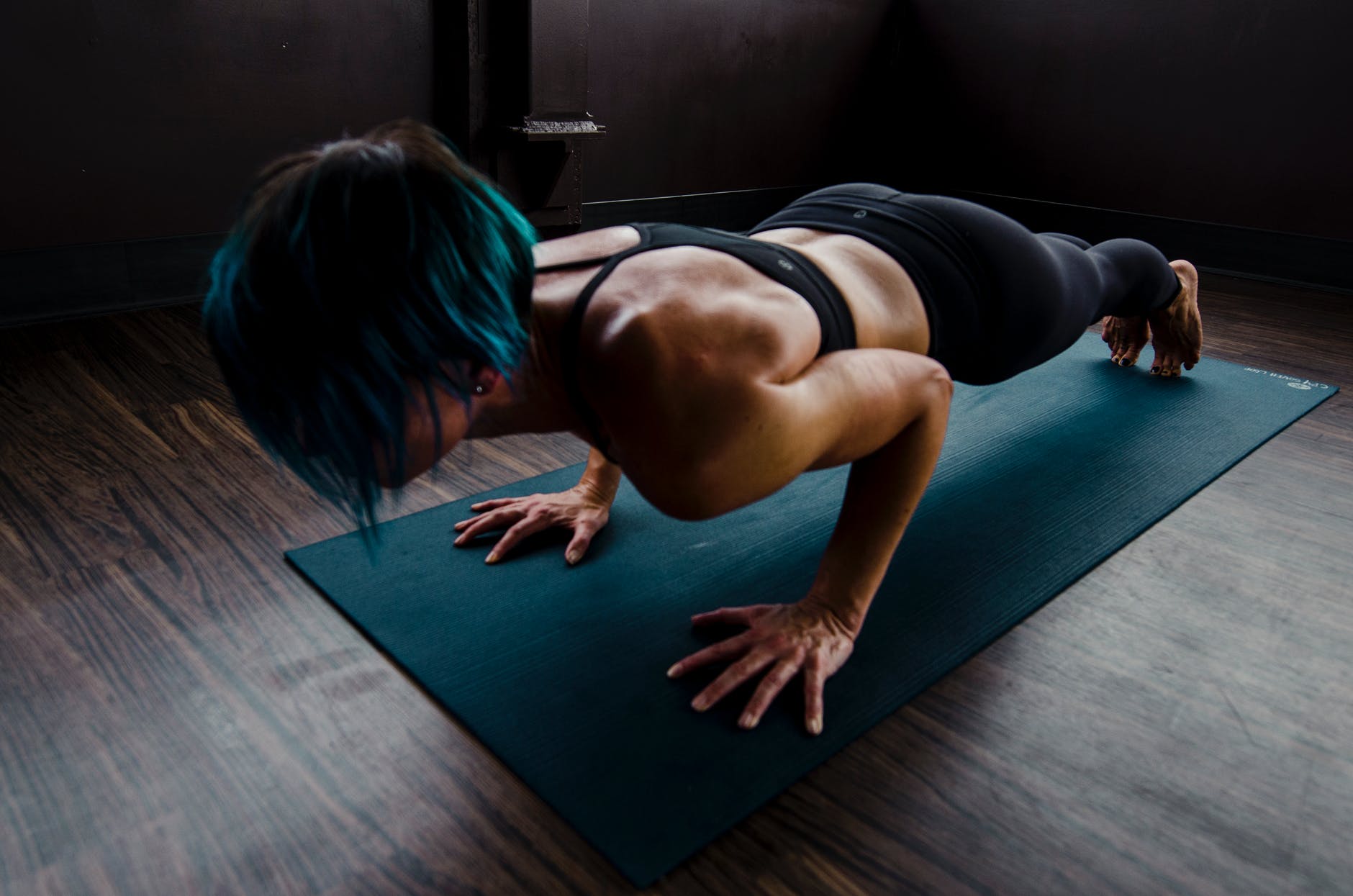
Arnold Schwarzenegger ran a campaign in 2012 called ‘Come with me if you want to lift.’ The campaign aimed to get as many people as possible, spending an hour per day working on their health and fitness. When listing the rules for success in his book, Arnold wrote that taking one hour to focus on your health is just 4% of your day. Spending this time each day will compound and lead to exponential improvements in your quality of life over time. Most people cannot find an additional hour in their day straight away, so he suggests to start with just 15 minutes or 1% of your day and as you progress, the amount of time you can devote to your fitness will go up.

Whenever you hear someone you care about complain about time, ask them if a longer, better life is worth 1%.

Arnold

Percy Cerutty had a similar idea in his 1967 book Be fit or be damned. Percy lists the three most essential areas for health; Pedestrianism, a strong core, and regularly picking up heavy things. For pedestrianism (walking and running), Percy suggested running just 15 minutes per day on most days, starting with walking, then progressing to run/walks, with a long term goal of running 2 miles in this time (7:30 minute miles). He also suggested doing one longer run per week that you build up to 10 miles. For core strength, Percy suggested doing ten sit-ups as soon as you get out of bed and working towards a goal of 100 in a single set with a second set in the evening before bed. The deadlift is the king of exercises, and Percy believed that everyone should do it regularly. He wrote that you should start with half your body weight on the bar and have an eventual goal for health of lifting your bodyweight 5-10 times off the floor.  

Dead-lifting, that is, heaving heavy articles whatever their nature may be off the earth, must be considered a primary physical function of homo sapiens.

In a society where most members can afford to have all or most of the modern amenities, the barbell should be considered an integral part of healthy living.

Percy Cerutty

Commit to spending just 15 minutes per day, every day on your health.

When asked by family and friends what they should do to get fit, I usually give two suggestions;

  1. Couch to 5k
  2. Andy Bolton’s kettlebell swing ladder.

The couch to 5k programmes, such as the free one provided by the National Health Service, progressively takes someone from not running at all to running five kilometres without walking in nine weeks. The kettlebell swings ladder starts with 5 minutes of exercise and builds up to 10 minutes, giving you some time to warm up with some air squats and glute bridges. Doing the couch to 5k run/walks three days per week, the kettlebell swings on the three other days, some sit-ups each morning, and a day off should give you a good start towards health. 

For January this year, I am giving the Yoga 15 challenge a go. If you are struggling to get a Kettlebell and it is too cold for you to start running, why not join me?

Once you are in a routine, have a go at some four minute movement breaks throughout your day to get you moving and deadhang from a bar for shoulder health. If you get a kettlebell and are doing the swings, add some overhead presses too. After completing your first 5k, have a look at what is next on your distance running progression.

Feel free to contact me on Twitter if you have any questions and let me know if you are committing to 1% of your day for your health.   

The Stotan Creed by Percy Cerutty

‘Stotans, will, by virtue of their philosophy, be nature lovers, with a respect and appreciation of all evolved or created things. They will appreciate the sanctity of creative effort both in themselves and in others. They will strive to understand the significance implied by reality, will be able to discern the real from the spurious, and see no anomaly in nudity, either in body or mind. But neither will they cast pearls before swine. Stotans, for all the reasons that their philosophy stands for hardness, toughness, unswerving devotion to an ideal, and many more – will look upon the sea as their pristine element and endeavour to associate themselves with their primeval source of life by going into the sea at least once per month in all seasons of the year. No practice is more disposed to toughen both the body and the morale than this. Stotans believe that neither the body nor mind can be maintained at a high pitch of efficiency unless sufficient regular rest is obtained, and aim at a daily average of eight hours sleep (that is for young men-older men need only six hours). Stotans, also will not be found in social places after midnight. Stotans shall regulate their lives so that at the end of a period, varying with the intensity of the effort, each shall realize that he has attained, without conscious striving, to a state of knowledge and a position of leadership in the community. It is axiomatic that only the pure can understand purity, only the cultivated appreciate beauty, and only the strong measure their strength. Therefore, only the self-disciplined can command genuine respect.’

Percy Cerutty

Taken from The Golden Mile: Herb Elliott’s biography as told by Alan Trengove. The word Stotan was made up by Cerutty by joining stoic and spartan to describe his philosophy to life and athletics.

Generating ideas with brainstorming

Brainstorming is the commonly used method to generate ideas. It is a group activity where the group’s collective thinking is used to come up with many ideas—booking a specific time allocated to brainstorming highlights to attendees that they have a defined period to generate ideas, and that the evaluation will come later. The technique first appeared in Alex Osborn’s 1942 book How to think up.

Ideation: the formation of ideas or concepts.

Oxford Languages

Brainstorming is a problem-solving process used to activate prior knowledge, develop possible theories or hypotheses, and identify things to research further. The session’s aim should be to construct a shared model to explain the problem and provide a clear direction for what to do next. Design Thinking, Design Sprints, and Problem-Based Learning (PBL) all make heavy use of brainstorming as a collaborative idea generation method. 

In PBL, once questions have been identified from the trigger material, the group brainstorms what they already know and identify potential solutions. The group then analyses and structures the brainstorming session’s output and uses missing knowledge to create learning objectives. Each group member then independently researches the objectives, and then they come back to discuss findings.

The Interaction Design Foundation rules for brainstorming

The Interaction Design Foundation has eight rules for running brainstorming sessions: 

  1. Set a time limit.
  2. Start with a question, a plan or a goal – and stay focused on the topic.
  3. Defer judgement or criticism, including non-verbal.
  4. Encourage weird, wacky and wild ideas.
  5. Aim for quantity.
  6. Build on each others’ ideas.
  7. Be visual.
  8. Allow one conversation at a time.

The key to generating new ideas is a challenging question or problem statement, get that right, and the rest is down to the people you get in the room. Have a single, specific problem statement that expresses a point of view or a question that challenges the groups’ assumptions. 

Do not let anyone evaluate any idea or answer as they are created. Coming up with ideas needs to be dynamic so shorter sessions of up to 60 minutes work best and force people to focus on new ideas rather than evaluating them. If you choose to go longer, never have more than 90 minutes without a break. 

Encourage as many crazy, wacky, and alternative ideas as possible; it is a quantity session, the quality will be developed from the ideas at a later session. Whiteboards with markers or post-it notes on a wall make it easy for people to follow and inspire more ideas, so prepare the room before you start. 

Switching between the two modes of individual and collective ideation sessions can be seamless—and highly productive. Alex Osborn’s 1950s classic Applied Imagination gave advice that is still relevant: Creativity comes from a blend of individual and collective ideation.

Interaction Design Foundation

Brain dumping – the brainstorm for individuals

Brainstorming is a group activity whereas the brain dump is its solo equivalent. By dumping all your ideas about something onto a page and out of your head, you open up mental space to more creative ideas.

You can use individual brain dumps and group brainstorming together for even better results and make sure everyone contributes. Getting each group member to do a brain dump at the start can help quiet group members contribute and free up everyone’s headspace for new ideas. You can use brain dumps after a brainstorming session to continue the conversation after the group session. Allocate five minutes at the start of the session for each member to write questions or ideas on paper or post-it notes and then share their thoughts, put these in a visible place and group together any duplicate ideas.

Try the better brainstorming technique

Hal Gregersen published a three-step method to better brainstorming sessions in the Harvard Business Review. The technique focuses on questions rather than answers to get group members excited about the challenge presented and avoids the negative traps present in many ideation sessions.

Step 1: Set the stage

Select a challenge you care deeply about and invite people that will see that challenge from fresh angles. Set our the problem in a maximum of 2 minutes, this will keep it high level and avoid constraining the questions with too much context.

Set two rules

  1. Questions only
  2. No preambles or justifications to questions

Step 2: Brainstorm the questions

Set a timer for 4 minutes and ask a group to generate as many questions as possible within this time. Aim for 15 questions in the 4 minutes to keep the pressure up and the focus on questions only. Once complete, check with the group about how they feel about the challenge, if needed, rerun the 4 minutes until the group is excited.

Step 3: Identify a quest – and commit to it

Study the questions and select a few interesting ones. Try to expand these questions with a set of follow-up questions related to them. Once the challenge is fully understood, and multiple approaches have emerged, commit to at least one pathway.

Let me know on Twitter if you give this a try. I will be doing a brain dump and then group brainstorm for my project 4W/KG in the coming week and will share the outcome.

New Year’s health and fitness tests and goals

No party last night means I am fresh to test myself and set some health and fitness targets for the coming year.

The 1-2-3-4 assessments

In his book ‘Can you go,’ Dan John provides a simple 1-2-3-4 assessment he uses with all his clients. As I have just finished one fitness challenge, I thought it would be the perfect time to check in with these to see how I am doing and what I need to focus on for health and longevity. The book is excellent, and the kindle version is currently £3.99 so pick up a copy to learn the details for the assessments and what to do with the results. 

Assessment 1: Stand on one foot

A simple test, stand on one foot for up to 30 seconds. Scoring above 30 seconds is the goal, holding for less than 10 seconds is a sign to visit a doctor for a check-up. 

Result: I achieved 30 seconds on both legs without issue.

Assessment 2: Measurements

Next are two simple body measurements, the first is weight, with over 300lbs being a signal to visit the doctor and dentist for a check-up. The second measurement is the ratio between height and waistline with the target being the waistline at least half the size of height, if not, then body composition is the focus until it is.

  • Measurement 1 – weight: 82.5kg (182lb)
  • Measurement 2 – height and waistline: h: 183cm, w: 91 cm

Assessment 3: Questions

Question one is related to mobility, with being able to sleep with one pillow being the target. Question two and three are to help understand the results of the other assessments.

  • Question 1 – How many pillows does it take for you to be comfortable at night?: One 
  • Question 2 – Do I eat colourful vegetables? I eat a lot of vegetables and a wide variety. I also eat a lot of everything else, particularly sugary treats which explains why I am not leaner. 
  • Question 3 – Do you exercise for a least half an hour each day? I exercise for at least 30 minutes almost every day, for the last year I have run 5-6 days per week and then done mobility and strength on top of this. I choose to have a day off each week for recovery.

Assessment 4: Four tests

The final part of the 1-2-3-4 assessment is four tests. The first is a two-minute plank, with anything less signalling a weak core. The second is based on Claudio Gil Araujo’s sitting-rising test where you attempt to go from standing to sitting on the ground to standing again with no assistance from a hand or knee. The last two are the standing long jump, and a farmers walk. The broad jump’s expected standard is to jump as long as you are tall, so 183cm in my case, but then find your sport’s standards as an additional measure. Brian Mac has published some athletics standards on his website that I will use as a guide. Dan john suggests that you should carry half bodyweight in each hand for the farmer’s walk.

  • Test 1 – Plank: 2 minutes (only just)
  • Test 2 – To the floor and back up again: One knee assisted getting back up (9 out of 10)
  • Test 3 – Standing long jump: 175cm (I think I am limited by technique more than power – I will practice and retest)
  • Test 4 – Farmers walk: 160 meters with 2x 24 kg Kettlebells.

The strength tests

Next is a check-in with Dan John’s strength standards from his book Interventions. I will not list the steps or details in this post but look at them on Dan’s Strength Standards…Sleepless in Seattle post, to learn more, purchase the Intervention book currently £4.99 on kindle. The audiobook is £3.99, and as with all his books, Dan reads it himself.

The standards:

  • Squat movement: Level 5
    • Front squat: 82.5kg (01/01/21)
    • Squat: 100kg (01/01/21) 
  • Press movement: Level 4
    • Bench press: 100kg (01/12/20)
    • One arm overhead press: 32kg Kettlebell (25/12/20)
  • Hip hinge movement Level 4
    • Deadlift: 142.5kg (13/12/20)
  • Pull movement: Level 5
    • Pullups: 13 (10/20)

Sport Specific test

I will split my year in half for endurance racing. I will use the first five months to raise my Functional Threshold Power (FTP) as high as possible in Project 4W/kg. I will use remaining seven months to get faster as a runner, with as much volume as possible to prepare for the Tromso Skyrun in early August and then targeting a fast 10k as the next step on my distance runners journey to end the year. These two goals will be the foundation for attempts at a sub 10-hour Ironman in 2022. 

Tests

  • Bike – FTP via Ramp test: 242 watts at 82.5kg (28/12/20)
  • Run – Half Marathon: 1:35:09 (20/12/20)
  • Body composition (01/01/21)
    • Weight: 82.5kg (01/01/21)
    • BMI: 24.9
    • Digital scales body fat: 17.9%

What to work on

  1. Eat much less sugar to get down to a bodyweight of 80kg or lower. My height to waist ratio from the measurements section of the 1-2-3-4 assessments is close to the recommended maximum. Making sure that it does not get larger is essential, and reducing my waistline is suggested. I train a reasonable amount, so I know this is all about diet and reducing the sugar I consume. Getting my body fat down to reduce my weight will also help with all my other fitness goals. I was down to 80kgs during my most intense training period this year, so I know it is very achievable. 
  2. Work on a stronger core by completing the Gymfit level one planking series, ten daily ab wheel rollouts, and proper bracing during all lifts. I was not committed to my ab work during my running training this year. Regular ab work is something I need to commit to if I want to be a faster runner. I barely managed to reach two minutes on the plank test I am falling far short of Jon Albon’s five-minute goal from my running this year.
  3. Practice my standing long jump a minimum of once per week until I can achieve a minimum jump of 216cm. I will be doing many power cleans, squats, and deadlifts over the next six months to help with my power on the bike. With an improvement in strength and power, weight loss, and regular practise to improve technique; I will aim to increase my standing long jump to the mark for an average athlete in the Brain Mac tables.
  4. Purchase 2x 40 kg Kettlebells and work up to a 100m farmer walk with both, a one-arm overhead press with one, and ten double-handed swings every minute for ten minutes. I was limited on the farmer’s walk test by my available weight. Two other challenges I want to achieve this year require a 40kg kettlebell and a future challenge will need two, so I will get two now rather than any other alternative for farmer’s walks. Perhaps the money I save on all that sugar will cover it?  
  5. Squat 120kg for a single, 82.5kg of fifteen reps, Front squat 100kg for a single, and complete level two of the Gymfit single leg squat progression. My strategy to achieving a four Watts per Kilogram Functional Threshold Power this year is to get strong, then powerful, then work on holding power for a longer duration. The front squat target is to bring it in line with my bench press, and the Gymfit goal is as much for the mobility progressions and knee and hip health as it is for balancing the strength of each leg.  
  6. Achieve a double bodyweight deadlift. The second half of the year will be focused on running, and so the strength focus will move from squatting to the deadlift. To make this target, I will continue to work up Andy Bolton’s ladder of heavy kettlebell swings and bring my power clean up to 100kg in line with my bench press. I will also use farmer’s walks and upper back work, such as elevated feet ring rows and weighted pullups to support this goal.
  7. Complete a Ramp test with a calculated FTP of 4 watts per kilogram. I detailed this in a recent post.
  8. Complete a 10k race with a target time of sub 40 minutes. This is the next step in my distance running progression.

Some thoughts

Eight fitness goals is a lot, and some of them are challenging but not out of reach. Some targets will support others, such as getting a strong squat and deadlift will form a solid base to be fast on the bike and run. The year is in two halves, each with their own goals. The first six months focused on the squat and bike FTP and the second half focused on a double bodyweight deadlift and a sub 40 minute 10k run. 

Am I too ambitious? If I achieve all eight targets by this time next year, I will know I did not set the bar high enough for myself. At 37, I am currently a fitter, more rounded, and smarter athlete than I have ever been, and I have used 2020 to achieve a level of strength and endurance that I am proud of. 2021 is a chance to build on this fitness and see what I can do.

Ready, set, go.

10 things I learned running 2000 miles in a year

You don’t become a runner by winning a morning workout. The only true way is to marshal the ferocity of your ambition over the course of many days, weeks, months, and (if you could finally come to accept it) years. The Trial of Miles; Miles of Trials

John L. Parker

I was not really a runner. I had done some ultra-distance stuff on trails including a few Skyruns, but at 85kg+, I had survived on pure grit, and I was far more comfortable going long on a bike. The tipping point was during the 2019 Outlaw X, an end of season middle-distance triathlon in the English Midlands. Training had gone well. I treated the 1.2-mile swim as a warm-up for the bike, I controlled the cycle, keeping to my conservative heart rate target and flew along the rolling hills that resembled my training routes just 40 miles south of the race location. As I pulled into the transition area at Thoresby Park, a lean and sinewed cyclist pulled alongside me and thanked me for the 56 miles of pacing and disappeared into a sea of bike rack. The relatively flat and familiar roads were much faster than the hills around Marbella from my first 70.3 Ironman earlier in the year, I had completed the first 57.2 miles in under three and a half hours, and I was on for a much faster time. The question in my head was ‘Can I get below five and a half hours?’ 

In short, the answer was no. What followed was two hours and five minutes of leaner fitter, and more prepared athletes passing me as I shuffled along. I finished in under 5:35 which I would have been thrilled with at the start of the race and my half marathon time was not any slower than my training had suggested, but mentally the race took a toll. If I was going to commit time, money, and annual leave from work to travel around Europe for endurance races, I needed to take them seriously; I needed to make myself a runner.

The most exciting thing for me about endurance races is the challenge of not knowing when I start if I can complete it. The Tromso Skyrun in the very North of Norway, at 57km long and with 4800 meters of elevation across some of the wildest mountains in Europe was a race that I knew I would need to commit to fully. In the Hamperokken Skyrace, I had a challenge that would force to become a runner. I set myself the target of running 1500 miles by the start of August before I lined up on the start line and a further 500 miles for the remainder of the year for 2000 miles in total, and signed up for six months coaching with the Skyrunning and obstacle course legend Jon Albon.

The Tromso Skyrun and all the other races I had signed up for were cancelled, but on Christmas Day, I completed the 2000 mile challenge. My final run was the seven miles and 500 meters of accent up to my local hill and back to my house in under an hour, cutting my best time from the previous year by over 12 minutes. I also completed a solo half marathon time trial on the 20th December in one hour, thirty-five minutes, and nine seconds, cutting down my PB from the start of the year by over 20 minutes. But more importantly, I am now a runner.

10 things I learned running 2000 miles in a year

samueljtannerblog.wordpress.com/2020/12/13/very-short-very-steep-very-fast-hill-sprints/(opens in a new tab)

  1. To run high mileage, you need to run at least six days per week every week. Know your daily target average and get it done.
  2. Spend time every day taking care of your hotspots – the niggles, pains, and tight areas you get while you run. If it starts to hurt, deal with it.
  3. Have a big scary audacious goal, then have a plan to achieve it. If you can afford to get a coach, they will accelerate your progress and help you avoid injury (Jon Albon is fantastic). If not, pick a programme and follow it, trying to execute each workout perfectly.
  4. Train all your running muscles to get faster, even if you are training for an Ultra. Train very short, very steep, very fast hill sprints, tempo runs, durations over 90 minutes and everything in between. 
  5. Run your quality sessions on the road and for everything else explore the trails. Use the Strava Explore Routes function to find new and exciting trails every time you go out.  
  6. Only buy premium running gear, your body will thank you. Premium stuff lasts, I have a Helly Hansen Lifa from over ten years ago, and it is still going strong. Focus on running shoes, running shorts, and a great watch (headphones too if you run with podcasts or music), the quality of the rest is less variable.
  7. Fuel to recover. Drink lots of water each day, get consistent amounts of protein, and eat more carbs on heavy training days. Drink a recovery shake and eat a piece of fruit straight after hard sessions.  
  8. Running is a full-body activity so get your whole body strong. Do sit-ups when you wake up, then another set before bed, practice the deadlift and overhead press, and work towards a 1.5x bodyweight deadlift and ten pull-ups. It might not make you much faster, but it will make you healthier, less prone to injury, and much more confident in your body.
  9. Read books by and about runners for motivation and make to make it part of your life. I recommend everything by Percy Cerutty including his biography Why Die, The Golden Mile by the legend Herb Elliot, From last to first by London Marathon winner and Olympic bronze medalist Charlie Spedding, and the novel Once a Runner by John L. Parker.
  10. Be a part of a running community or have a few running friends to do some group training runs and races. Create a Whatsapp group with some runners to keep you motivated and suggest a yearly run streak.

I have transformed my running this year, not only am I faster (not yet fast), but I look and feel far more fluid when I run. I do still, however, have several things I need to work on. I am terrible at doing my core strength exercises, and the community element has been challenging this year, two things that should be easy fixes. Fast runners are lean, and I love sugar, I will have to start eating like an adult if I want to be fast. Finally, I can make myself suffer in an effort on a bike, but I don’t feel I can push myself as hard when running. Developing more mental strength when running, losing some excess weight, doing my core work, and running with others can get me to the next level on my distance running journey.    

You can find out about Jon Albon’s coaching on his website. There are cheaper coaches, but Jon is a world-class athlete and self-coached, so you are getting a lot for your money. 

Let me know on Twitter if you have any questions on anything in this post.