First impressions are made in a blink of an eye and can have lasting effects

I have not worn a shirt for work in 12 months. Since working from home, my wardrobe has gone toward the relaxed end of business casual. I convince myself that this is OK because I run a team of people with Designer in their job title and I make an effort to buy quality, branded, smart clothes that last. However, my premise somewhat fails when I look at my calendar and realise that I spend most of my time in video calls with people in director or management roles. Tuesdays for me are the busiest days for meetings, and so for a few weeks I started to wear a shirt each Tuesday, but two of my reoccurring committees that day ended as we moved to a new phase at the university, so my shirt-wearing ended along with the meetings.

People are much more forgiving of your presentation and other elements of professionalism once they know you than when you first meet. First impressions are made within a tenth of a second and once formed can affect the way you think of someone for over six months after you meet. First impressions can be so influential over how you feel about someone that even when presented with facts that contradict these initial feelings, your brain will side with the false first impressions.

Professionalism is the habits and norms that people see as acceptable within a field and is highly specific to an industry or profession. The variability of standards is particularly relevant for your appearance. Many design agencies would not hire someone who turned up to an interview in a suit, but it is the opposite for many corporate positions. A study found that wearing a brand named cloths has a positive effect on first impressions. Other habits, however, like turning up on time and good levels of personal hygiene are universal.

Acting professionally in the right context allows people to focus on your work skills. You do not have to change or hide your personality but making sure you don’t distract people with your appearance or grammar, this will allow them to focus on what you say and make them more open to getting to know you. Just be genuine, making an effort, and respect peoples time. 

 Quantic suggests that you pay attention to: 

  • Appearance: be neat, clean, and dressed appropriately
  • Demeanour: be confident, articulate, have good posture, and a firm handshake
  • Reliability: Show up on time and prepared 
  • Ethics: Be honest, kind, helpful, and moral.
Daily stand-ups for remote working

From the first day of lockdown in March, I have held a daily catch-up with my team first thing each working day. The main intention was to give the team a feeling of connection and maintain a level of routine. It also helped to get us through a hectic work period moving a university of 33,000 students from campus-based delivery entirely online. 

The daily conversations kept everyone aware of changes, got quick answers to questions, and it allowed emerging problems to get identified and fixed before they got too big. Interestingly, I tested the idea of scrapping the catch-up after planning the new academic year in October, and the whole team rejected it. I wanted to give everyone back a couple of hours of their week, but the team saw it as the best part of their working day. We had a week off the meetings in the end, but they have become the centrepiece of how we plan and run our projects.

A ‘stand-up’ meeting is 10-15 minute informal meeting where attendees stand to force them to keep it short. Queen Victoria introduced stand-ups with her Privy Council in 1861 to minimise her public duties. More recently, it has been adopted by various agile project management methodologies, including Scrum and Kanban. The goal is to increase workflow through collaborative problem solving and signpost things that will soon cause problems. 

How to run a daily stand-up

  1. Book out a daily meeting first thing in the working day. I book mine for 25 minutes to keep some space reserved in the calendar if follow-up conversations are needed. The aim is to have them complete in 15 minutes.
  2. Keep them as conversations but short and to the point. I use the first 5 minutes for social discussion and then a quick update from me including a what I completed yesterday, what I am doing today, and what I need from the team.
  3. Get each member of the group to do a 60-second status update. Ensure each person shares and let some conversation naturally emerge but once it starts to get into detail intervene with “Let us carry this on outside of the stand-up”. Each member should share:
    1. What they are will complete today.
    2. Requests for collaboration.
  4. End the meeting with an opening for questions or issues that the team want to raise. A final opportunity to talk usually brings up a few questions, and so is worth adding. 

We use Microsoft Teams with a reoccurring meeting invite to host the video call. Using Teams allows the chat channel to stay open for social and work conversations to continue for the rest of the day. We set a rule early on that video is needed to make the calls more personal and people stick to it most days. Working from home can be isolating, and the social element of an office is hard to replicate. A short daily call acts as an icebreaker and helps keep the team collaboratively solving problems while having some fun. 

Have a go with your team and let me know how it goes on Twitter

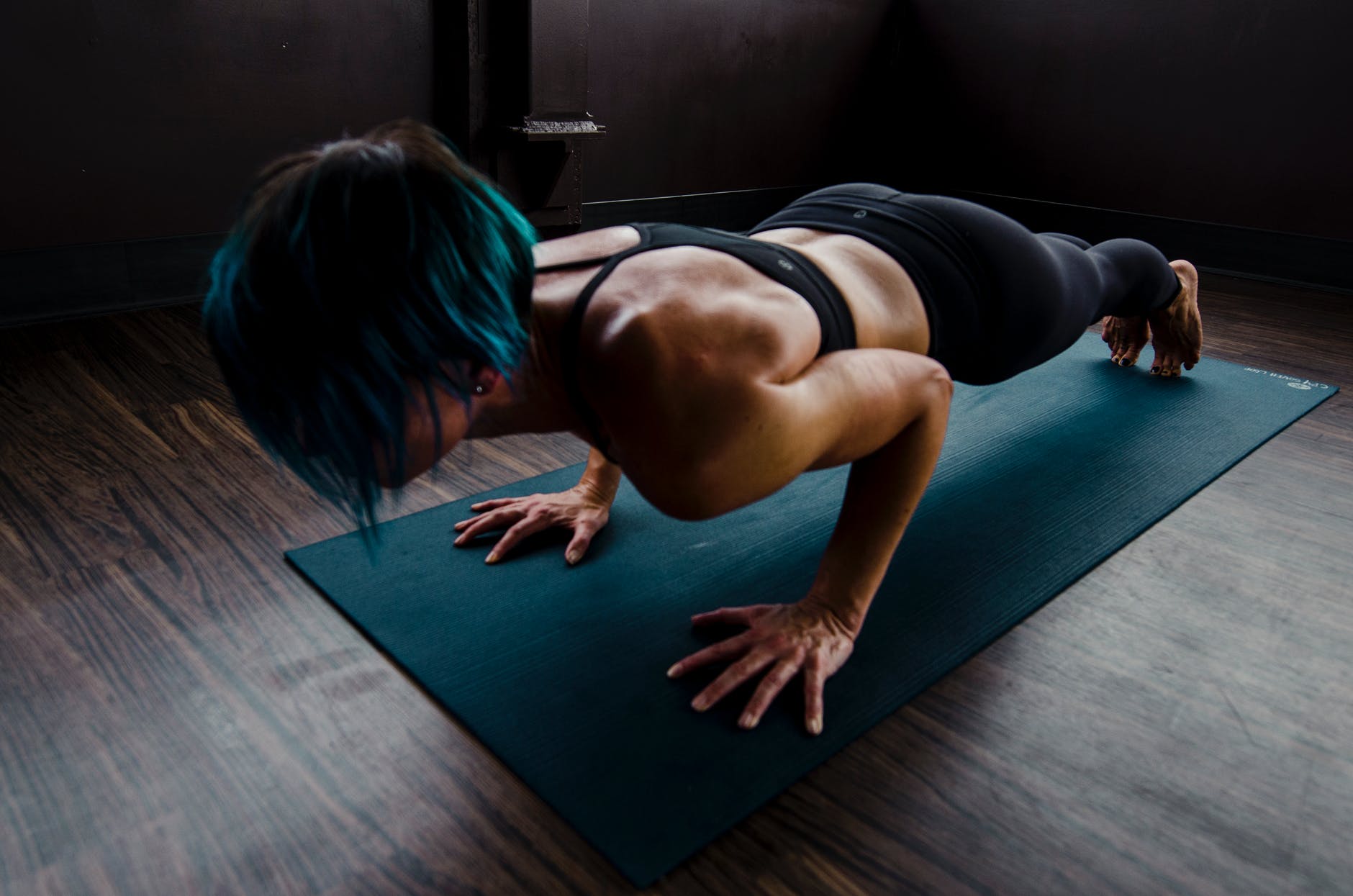
Is your health worth 1% of your day?

Photo by Karl Solano on Pexels.com

Arnold Schwarzenegger ran a campaign in 2012 called ‘Come with me if you want to lift.’ The campaign aimed to get as many people as possible, spending an hour per day working on their health and fitness. When listing the rules for success in his book, Arnold wrote that taking one hour to focus on your health is just 4% of your day. Spending this time each day will compound and lead to exponential improvements in your quality of life over time. Most people cannot find an additional hour in their day straight away, so he suggests to start with just 15 minutes or 1% of your day and as you progress, the amount of time you can devote to your fitness will go up.

Whenever you hear someone you care about complain about time, ask them if a longer, better life is worth 1%.

Arnold

Percy Cerutty had a similar idea in his 1967 book Be fit or be damned. Percy lists the three most essential areas for health; Pedestrianism, a strong core, and regularly picking up heavy things. For pedestrianism (walking and running), Percy suggested running just 15 minutes per day on most days, starting with walking, then progressing to run/walks, with a long term goal of running 2 miles in this time (7:30 minute miles). He also suggested doing one longer run per week that you build up to 10 miles. For core strength, Percy suggested doing ten sit-ups as soon as you get out of bed and working towards a goal of 100 in a single set with a second set in the evening before bed. The deadlift is the king of exercises, and Percy believed that everyone should do it regularly. He wrote that you should start with half your body weight on the bar and have an eventual goal for health of lifting your bodyweight 5-10 times off the floor.  

Dead-lifting, that is, heaving heavy articles whatever their nature may be off the earth, must be considered a primary physical function of homo sapiens.

In a society where most members can afford to have all or most of the modern amenities, the barbell should be considered an integral part of healthy living.

Percy Cerutty

Commit to spending just 15 minutes per day, every day on your health.

When asked by family and friends what they should do to get fit, I usually give two suggestions;

  1. Couch to 5k
  2. Andy Bolton’s kettlebell swing ladder.

The couch to 5k programmes, such as the free one provided by the National Health Service, progressively takes someone from not running at all to running five kilometres without walking in nine weeks. The kettlebell swings ladder starts with 5 minutes of exercise and builds up to 10 minutes, giving you some time to warm up with some air squats and glute bridges. Doing the couch to 5k run/walks three days per week, the kettlebell swings on the three other days, some sit-ups each morning, and a day off should give you a good start towards health. 

For January this year, I am giving the Yoga 15 challenge a go. If you are struggling to get a Kettlebell and it is too cold for you to start running, why not join me?

Once you are in a routine, have a go at some four minute movement breaks throughout your day to get you moving and deadhang from a bar for shoulder health. If you get a kettlebell and are doing the swings, add some overhead presses too. After completing your first 5k, have a look at what is next on your distance running progression.

Feel free to contact me on Twitter if you have any questions and let me know if you are committing to 1% of your day for your health.   

How not to get fat

The great thing about physical training is that if you show up consistently and do the work, you get stronger. Today was the first test day for my deadlift in years. I was successful with my target of 142.5kgs, the total amount of weight I currently have in my gym. This is not the heaviest I have ever lifted, but probably one of the most satisfying. I am older, lighter by at least 12kgs, and running higher mileage than ever but still able to move a ‘reasonable’ amount of weight. I am stronger in the bench and pull-ups than ever before too. More importantly, my body feels good. 

At the start of the year, I set myself a challenge to take my training seriously. I do not have kids or other heavy commitments outside of work other than being a responsible adult and husband. I have taken advantage of working from home and no commute to train two times per day for much of the year, adding rest where needed. I have used this time to work on ticking off some strength standards as well as running faster. These include 100kg bench press, 13 strict pull-ups, I can perform solid reps of dips, press double 24kg kettlebells overhead for ten reps, and many others.

Despite two good training sessions per day, usually a 6+ mile run, in the morning or since the weather turned, at lunch, and a strength and mobility session in the evening, I have looked fit and healthy but not great. Part of this is my insanely sweet tooth, lack of discipline in my eating, and ready access to my kitchen at all times. Still, part of it is something most people working from home since march will be familiar with, I spend the rest of the day sitting down. About six weeks ago, I wanted to make some changes to what I do outside of this 60-90 minutes per day of exercise to try and look as good as I feel.

James A Levine defines Non-exercise activity thermogenesis (NEAT) as ‘the energy expended for everything we do that is not sleeping, eating or sports-like exercise.’ NEAT is your general level of activity; the walking from your car to the office, taking stairs over the lift, and walking to someone’s desk instead of sending an email. If you are a knowledge worker and have been working from home for the last nine months, your NEAT has probably taken a swan dive, and your body has suffered for it.

I have been artificially adding back into my life this general activity. I started with an idea from Percy Cerutty; set of 10 sit-ups or more when I first wake up and then 5 minutes of activity to get my heart rate up after sleep. This 5 minute has been anything from some push-ups and squats to light kettlebell work, some stretches, or my latest choice of a few upper body movements with an exercise band.

Next, I started hanging from a pull-up bar for 30 seconds three times during the day. Once these were habit, I took an idea from the Gymfit newsletter and started to add short 4-minute movement breaks between meetings or after a couple of hours of intense work. The movements might be a few stretches, some bodyweight movements like 20 press-ups, some planks, or even a little sing and dance to Hey Jude by the Beatles. GymFit suggests setting a timer every 45 minutes and adding one of these breaks, but I have started to put my meetings to 50 minutes instead of an hour and use the few minutes between to do some movement.

Tomorrow, wake up and do a set of 10 sit-ups. Repeat every day for 200 days. After the first few days add one 30-60 second plank after your shower and before you work. Commit to adding movement breaks randomly and without planning. Your body will thank you.

Let me know how it goes on Twitter