I started habit building in October, this is what they look like now

Photo by Claire Thibault on Pexels.com

I created new resolutions to turn my goals into habits in October this year. By focusing on building small, consistent habits, I wanted to be able to make lasting changes and achieve my long-term dreams. Here are a few of the things I am building at the moment:

  1. Health
  2. Relationships
  3. Strategic thinking
  4. Work Ethic & Obsession
  5. Focus
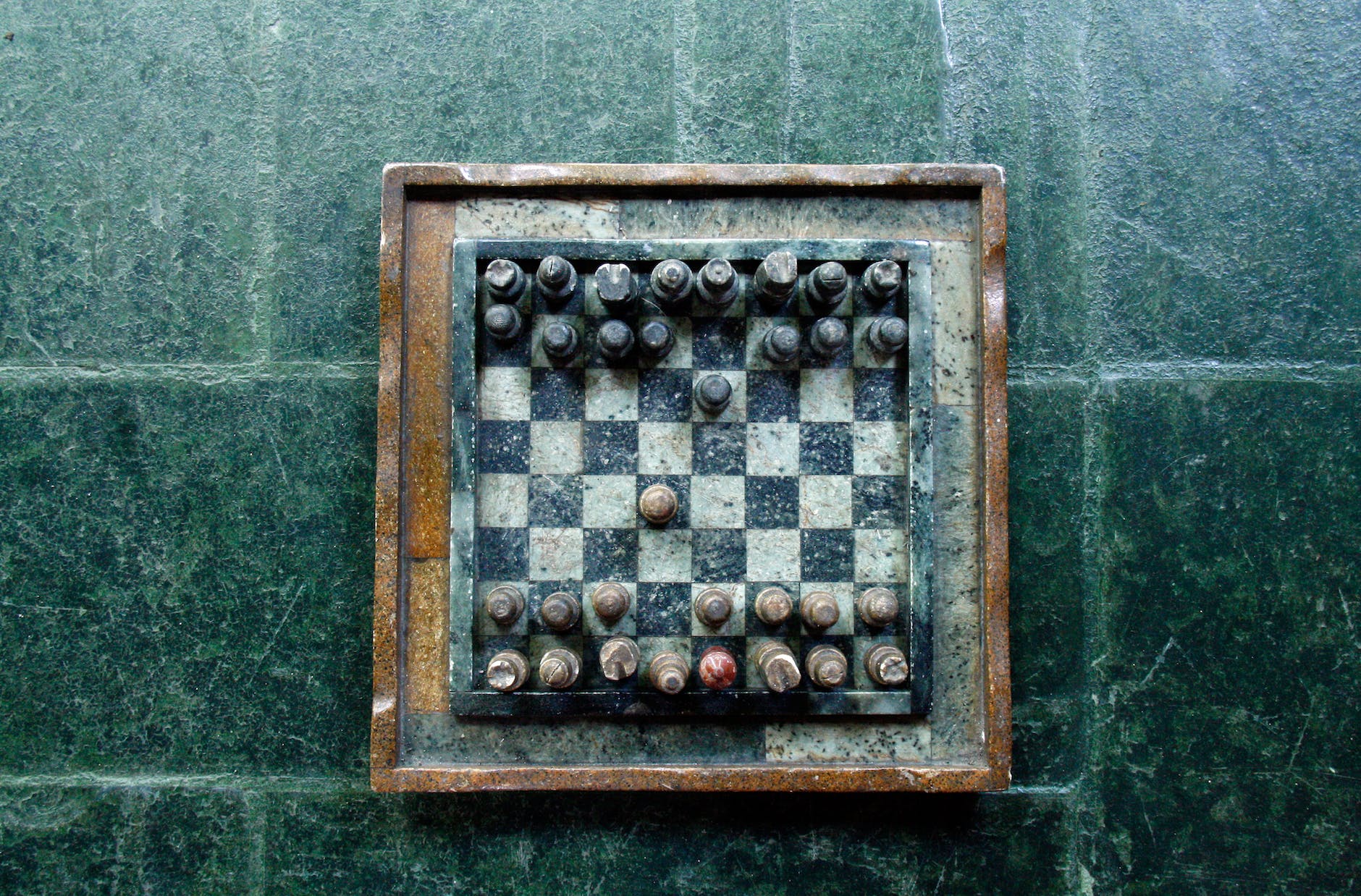
  6. Chess Elo

For the last three months, I have been working with a coach and (almost) each day; I have slept 7+ hours, tracked my weight and eating and hit 200g+ of protein, walked 10k+ steps, drank 4 litres of water, got outside in nature, done 20-30 mins on the turbo, breathwork, and lift weights four times per week. 

I am being more deliberate with who I spend time, finding people who make extreme goals feel normal—relentless humans climbing mountains and playing long-term games. I seek to cultivate deeper connections with a small number of people. 

I have begun planning in years and decades, reading the books of great thinkers, thinking big thoughts and planning big plans, spending time analysing situations, and working on my future self and identity.

I am working harder, taking ownership and accountability. I only finish when the job is done, delivering more than is required, and going narrow and deeper. I hold myself and the people around me to a higher standard, not letting things go and not apologising or hiding my obsessions or work ethic.

I spend time in silence, reduce distractions and try to live in the moment, paying attention and enjoying the small things. I seek the flow state each day where I produce meaningful creative output, carving out time for deep focused work.

I have joined the endless battle within the 64 squares.

Thirteen tips for getting better sleep

I go through stages of having issues sleeping. I usually find it easy to go to sleep, but either dance around like a fish out of water or wake up between 2 am and 4 am and then don’t get back to sleep. If you sleep like a baby, ignore these and keep doing what you are doing, but one or more might help if you have issues like me.

  1. Have a sleep routine: go to bed and get up at the same time each day, even on weekends to take advantage of your natural circadian rhythm.
  2. Sleep for between six and nine hours every night: The amount of sleep you need is dependent on several factors, set a fixed wake-up time and move around your sleep time depending on how you feel each morning until you find the duration you need.
  3. Get as much sleep before midnight as possible: research suggests that this is when the best quality sleep happen. Set your bedtime between 9:30 and 11:00 pm.
  4. Get light outside for at least 30-60 minutes per day: Getting out right after you get up will help anchor your master clock that controls your circadian rhythm. A lack of Vitamin D affects sleep, so supplement if you don’t get exposed to a lot of sunshine, particularly in Winter.
  5. Don’t eat anything after 8 pm: Leaving time between eating and going to bed will allow your insulin levels to get back to normal.
  6. Have a wind-down routine: have a hot bath, write a todo list to get things out of your head, do some light relaxation stretches, listen to relaxing music, read a book (use a Kindle Oasis with no blue light)
  7. Avoid screens for at least an hour before you go to bed: blue light from screens will trick your brain into thinking it is daytime and make it harder to get to sleep.
  8. Don’t drink coffee after 1 pm: Caffeine can affect people for up to six hours after a coffee. If you can, only use coffee for those times when you need a cognitive boost.
  9. Make your bedroom a cave: keeping your bedroom dark, quiet, and at a cool temperature (between 18C and 24C) to help you get to sleep quicker.
  10. Eat more protein during the day and carbs at night: Protein is a mild stimulant and carbs activate the orexin pathway that makes you sleepy. 
  11. Take a ZMA supplement 30 minutes before sleep: The magnesium specifically aids sleep but prepare for some strange dreams the first few nights. 
  12. Exercise but not too much: Staying active throughout the day is essential for your general health and insulin responsiveness, but training twice per day or long and intense cardio sessions will negatively affect sleep. Consider regular movement breaks if you work at a desk all day and strength training three times per week between 3 an 6 pm.
  13. Track your sleep and monitor things that affect its quality: I wear my Garmin running watch at night to monitor my sleep duration and quality during periods where I don’t sleep well. I find I get good sleep duration but low quality with minutes of deep sleep in the single figures. Tracking your sleep will help you learn which of these tips you can ignore and which you need to follow.

New Year’s health and fitness tests and goals

No party last night means I am fresh to test myself and set some health and fitness targets for the coming year.

The 1-2-3-4 assessments

In his book ‘Can you go,’ Dan John provides a simple 1-2-3-4 assessment he uses with all his clients. As I have just finished one fitness challenge, I thought it would be the perfect time to check in with these to see how I am doing and what I need to focus on for health and longevity. The book is excellent, and the kindle version is currently £3.99 so pick up a copy to learn the details for the assessments and what to do with the results. 

Assessment 1: Stand on one foot

A simple test, stand on one foot for up to 30 seconds. Scoring above 30 seconds is the goal, holding for less than 10 seconds is a sign to visit a doctor for a check-up. 

Result: I achieved 30 seconds on both legs without issue.

Assessment 2: Measurements

Next are two simple body measurements, the first is weight, with over 300lbs being a signal to visit the doctor and dentist for a check-up. The second measurement is the ratio between height and waistline with the target being the waistline at least half the size of height, if not, then body composition is the focus until it is.

  • Measurement 1 – weight: 82.5kg (182lb)
  • Measurement 2 – height and waistline: h: 183cm, w: 91 cm

Assessment 3: Questions

Question one is related to mobility, with being able to sleep with one pillow being the target. Question two and three are to help understand the results of the other assessments.

  • Question 1 – How many pillows does it take for you to be comfortable at night?: One 
  • Question 2 – Do I eat colourful vegetables? I eat a lot of vegetables and a wide variety. I also eat a lot of everything else, particularly sugary treats which explains why I am not leaner. 
  • Question 3 – Do you exercise for a least half an hour each day? I exercise for at least 30 minutes almost every day, for the last year I have run 5-6 days per week and then done mobility and strength on top of this. I choose to have a day off each week for recovery.

Assessment 4: Four tests

The final part of the 1-2-3-4 assessment is four tests. The first is a two-minute plank, with anything less signalling a weak core. The second is based on Claudio Gil Araujo’s sitting-rising test where you attempt to go from standing to sitting on the ground to standing again with no assistance from a hand or knee. The last two are the standing long jump, and a farmers walk. The broad jump’s expected standard is to jump as long as you are tall, so 183cm in my case, but then find your sport’s standards as an additional measure. Brian Mac has published some athletics standards on his website that I will use as a guide. Dan john suggests that you should carry half bodyweight in each hand for the farmer’s walk.

  • Test 1 – Plank: 2 minutes (only just)
  • Test 2 – To the floor and back up again: One knee assisted getting back up (9 out of 10)
  • Test 3 – Standing long jump: 175cm (I think I am limited by technique more than power – I will practice and retest)
  • Test 4 – Farmers walk: 160 meters with 2x 24 kg Kettlebells.

The strength tests

Next is a check-in with Dan John’s strength standards from his book Interventions. I will not list the steps or details in this post but look at them on Dan’s Strength Standards…Sleepless in Seattle post, to learn more, purchase the Intervention book currently £4.99 on kindle. The audiobook is £3.99, and as with all his books, Dan reads it himself.

The standards:

  • Squat movement: Level 5
    • Front squat: 82.5kg (01/01/21)
    • Squat: 100kg (01/01/21) 
  • Press movement: Level 4
    • Bench press: 100kg (01/12/20)
    • One arm overhead press: 32kg Kettlebell (25/12/20)
  • Hip hinge movement Level 4
    • Deadlift: 142.5kg (13/12/20)
  • Pull movement: Level 5
    • Pullups: 13 (10/20)

Sport Specific test

I will split my year in half for endurance racing. I will use the first five months to raise my Functional Threshold Power (FTP) as high as possible in Project 4W/kg. I will use remaining seven months to get faster as a runner, with as much volume as possible to prepare for the Tromso Skyrun in early August and then targeting a fast 10k as the next step on my distance runners journey to end the year. These two goals will be the foundation for attempts at a sub 10-hour Ironman in 2022. 

Tests

  • Bike – FTP via Ramp test: 242 watts at 82.5kg (28/12/20)
  • Run – Half Marathon: 1:35:09 (20/12/20)
  • Body composition (01/01/21)
    • Weight: 82.5kg (01/01/21)
    • BMI: 24.9
    • Digital scales body fat: 17.9%

What to work on

  1. Eat much less sugar to get down to a bodyweight of 80kg or lower. My height to waist ratio from the measurements section of the 1-2-3-4 assessments is close to the recommended maximum. Making sure that it does not get larger is essential, and reducing my waistline is suggested. I train a reasonable amount, so I know this is all about diet and reducing the sugar I consume. Getting my body fat down to reduce my weight will also help with all my other fitness goals. I was down to 80kgs during my most intense training period this year, so I know it is very achievable. 
  2. Work on a stronger core by completing the Gymfit level one planking series, ten daily ab wheel rollouts, and proper bracing during all lifts. I was not committed to my ab work during my running training this year. Regular ab work is something I need to commit to if I want to be a faster runner. I barely managed to reach two minutes on the plank test I am falling far short of Jon Albon’s five-minute goal from my running this year.
  3. Practice my standing long jump a minimum of once per week until I can achieve a minimum jump of 216cm. I will be doing many power cleans, squats, and deadlifts over the next six months to help with my power on the bike. With an improvement in strength and power, weight loss, and regular practise to improve technique; I will aim to increase my standing long jump to the mark for an average athlete in the Brain Mac tables.
  4. Purchase 2x 40 kg Kettlebells and work up to a 100m farmer walk with both, a one-arm overhead press with one, and ten double-handed swings every minute for ten minutes. I was limited on the farmer’s walk test by my available weight. Two other challenges I want to achieve this year require a 40kg kettlebell and a future challenge will need two, so I will get two now rather than any other alternative for farmer’s walks. Perhaps the money I save on all that sugar will cover it?  
  5. Squat 120kg for a single, 82.5kg of fifteen reps, Front squat 100kg for a single, and complete level two of the Gymfit single leg squat progression. My strategy to achieving a four Watts per Kilogram Functional Threshold Power this year is to get strong, then powerful, then work on holding power for a longer duration. The front squat target is to bring it in line with my bench press, and the Gymfit goal is as much for the mobility progressions and knee and hip health as it is for balancing the strength of each leg.  
  6. Achieve a double bodyweight deadlift. The second half of the year will be focused on running, and so the strength focus will move from squatting to the deadlift. To make this target, I will continue to work up Andy Bolton’s ladder of heavy kettlebell swings and bring my power clean up to 100kg in line with my bench press. I will also use farmer’s walks and upper back work, such as elevated feet ring rows and weighted pullups to support this goal.
  7. Complete a Ramp test with a calculated FTP of 4 watts per kilogram. I detailed this in a recent post.
  8. Complete a 10k race with a target time of sub 40 minutes. This is the next step in my distance running progression.

Some thoughts

Eight fitness goals is a lot, and some of them are challenging but not out of reach. Some targets will support others, such as getting a strong squat and deadlift will form a solid base to be fast on the bike and run. The year is in two halves, each with their own goals. The first six months focused on the squat and bike FTP and the second half focused on a double bodyweight deadlift and a sub 40 minute 10k run. 

Am I too ambitious? If I achieve all eight targets by this time next year, I will know I did not set the bar high enough for myself. At 37, I am currently a fitter, more rounded, and smarter athlete than I have ever been, and I have used 2020 to achieve a level of strength and endurance that I am proud of. 2021 is a chance to build on this fitness and see what I can do.

Ready, set, go.

How not to get fat

The great thing about physical training is that if you show up consistently and do the work, you get stronger. Today was the first test day for my deadlift in years. I was successful with my target of 142.5kgs, the total amount of weight I currently have in my gym. This is not the heaviest I have ever lifted, but probably one of the most satisfying. I am older, lighter by at least 12kgs, and running higher mileage than ever but still able to move a ‘reasonable’ amount of weight. I am stronger in the bench and pull-ups than ever before too. More importantly, my body feels good. 

At the start of the year, I set myself a challenge to take my training seriously. I do not have kids or other heavy commitments outside of work other than being a responsible adult and husband. I have taken advantage of working from home and no commute to train two times per day for much of the year, adding rest where needed. I have used this time to work on ticking off some strength standards as well as running faster. These include 100kg bench press, 13 strict pull-ups, I can perform solid reps of dips, press double 24kg kettlebells overhead for ten reps, and many others.

Despite two good training sessions per day, usually a 6+ mile run, in the morning or since the weather turned, at lunch, and a strength and mobility session in the evening, I have looked fit and healthy but not great. Part of this is my insanely sweet tooth, lack of discipline in my eating, and ready access to my kitchen at all times. Still, part of it is something most people working from home since march will be familiar with, I spend the rest of the day sitting down. About six weeks ago, I wanted to make some changes to what I do outside of this 60-90 minutes per day of exercise to try and look as good as I feel.

James A Levine defines Non-exercise activity thermogenesis (NEAT) as ‘the energy expended for everything we do that is not sleeping, eating or sports-like exercise.’ NEAT is your general level of activity; the walking from your car to the office, taking stairs over the lift, and walking to someone’s desk instead of sending an email. If you are a knowledge worker and have been working from home for the last nine months, your NEAT has probably taken a swan dive, and your body has suffered for it.

I have been artificially adding back into my life this general activity. I started with an idea from Percy Cerutty; set of 10 sit-ups or more when I first wake up and then 5 minutes of activity to get my heart rate up after sleep. This 5 minute has been anything from some push-ups and squats to light kettlebell work, some stretches, or my latest choice of a few upper body movements with an exercise band.

Next, I started hanging from a pull-up bar for 30 seconds three times during the day. Once these were habit, I took an idea from the Gymfit newsletter and started to add short 4-minute movement breaks between meetings or after a couple of hours of intense work. The movements might be a few stretches, some bodyweight movements like 20 press-ups, some planks, or even a little sing and dance to Hey Jude by the Beatles. GymFit suggests setting a timer every 45 minutes and adding one of these breaks, but I have started to put my meetings to 50 minutes instead of an hour and use the few minutes between to do some movement.

Tomorrow, wake up and do a set of 10 sit-ups. Repeat every day for 200 days. After the first few days add one 30-60 second plank after your shower and before you work. Commit to adding movement breaks randomly and without planning. Your body will thank you.

Let me know how it goes on Twitter

Deadhang for good posture and shoulder health

One of the best stretches you can do is to dead-hang from a bar. According to John M. Kirch, one of the worlds leading orthopaedic surgeons, hanging for 30 seconds three times per day can cure or prevent 99% of all shoulder pain. Hanging from a bar will open up the shoulder joint, improve mobility and strengthens the shoulder.

Kirch came to this conclusion by noticing the similarity of the human’s shoulder join to that or the great apes. These apes still brachiate; hand and swing from trees, and adapting this practice into our own lives will allow the shoulder to do what it is designed to do.

If you were chased by a tiger up a tree, the muscles you use to hang on to the branch for a long time are tonic muscles. If you decided to chase a deer and throw rocks, you would use your phasic muscles.

Dan John

Regular hanging can help with hunched over posture too. Doctor Vladimir Janda, a neurologist and exercise physiologist, when studying posture separated muscles into two groups; tonic muscles that shorten with age and phasic muscles, which weaken with age. The tonic muscles include By stretching the tonic muscles and strengthening the phasic muscles; we can improve posture and reduce the likelihood of pain from long hours of sitting hunched over a laptop or slumped on a sofa.

Working on a University campus, I used to spend a lot of time walking between buildings for meetings and would regularly hit 10,000 steps without thinking about it. At the time of writing, I have been working from home for the last seven months. All my meetings are video calls in front of a computer in my spare bedroom with no forced transit every 50 minutes. With walking no longer a natural part of my day, and spending most of my working day sitting down with less than graceful posture, I have had to find ways to introduce physical activity and stretching to the natural gaps. 

Adding it to my routine

For every day I work from home I am finding three times when I can hang from a door mounted pull up bar I bought from Amazon for less than a week’s worth of petrol. In an ideal world, I aim to do the first 30-second hang when I wake up, the second when I break for lunch to get the 4-5 hours of sitting in front of a computer out of my back, and the final 30 seconds when I finish in the evening to stretch off the day. The reality is messier, and I stopped using a timer after the first few days and go off feel and grip strength. The main thing is I am stretching regularly and can feel the difference in my back, chest, and posture.

Try the dead-hang for better posture and shoulder health

Grab a pull up bar, monkey bars, a tree branch, or anything else you can hang from with an overhand grip around shoulder-width apart and hang, allowing your shoulders to relax completely. If your grip can’t take 30 seconds straight away, do what you can and gradually work up to 30 seconds. Alternatively, you can rest your feet on a bench or the floor and use your legs to take some of the weight, gradually reducing the amount of weight until you can do 30 seconds hanging unaided.  

Contact me on Twitter if you try this and want to share how it went. If you are interested in this and want to know more, I suggest you read ‘Shoulder Pain? The Solution & Prevention’ by John M Kirsch