The Overton Window

You often hear on the news that an event or series of events has shifted the Overton window. This was spoken about regularly around Jeremy Corbyn’s Labour leadership to explain why his socialist policies were now acceptable and popular with a majority of the public. Policies that fall outside of the window will cause dissatisfaction and lose public approval, so politicians must identify the current window position and keep proposals within this window of acceptability. Activists will attempt to move the window or expand it by persuading the public of a given political idea’s merits or even shutting down beliefs seen as acceptable to shift the widow towards their views.

The Overton Window, or the discourse window, is a term used in political science to explain the range of policies that are seen as acceptable by the public at any given time. If a policy falls outside the Overton window, it’s seen as too extreme for the voting public to accept. The Overton window moves, so a policy idea in one election year might be seen as radical, might then be seen as popular just four years later for the next election.

Joseph Overton created the model to describe the level of government intervention the voters would be prepared to accept on a spectrum with freer on one end and less free on the other. The window can move up and down the range with the public mood. Joshua Trevino later added six degrees of acceptance to the model: from unthinkable, radical, acceptable sensible, popular, and finally policy.

The six degrees work both ways along the spectrum, meaning that there are currently unthinkable policies on both ends of the freedom spectrum and softer versions of these that might be seen as sensible or even popular. The current lockdown in the UK is an excellent example of a dramatic shift of the Overton window; eighteen months ago, it would have been unthinkable for a democratic government to restrict the public from leaving their homes for months at a time. However, we are over two months into the second set of tight restrictions on movement, and according to YouGov, Government disapproval is only at 43%, and approval is 36%. The Prime Minister’s approval rating is at 41%, roughly the same as in January 2020 before the pandemic began.

Many activists with political views currently in the unthinkable areas of the spectrum will attempt to restrict freedom of speech at the other end of the spectrum. These activities use techniques, such as no-platforming. They try to stop venues from allowing a speaker from holding an event, pressuring organisations to enact policies that prevent free expression, or repeatedly questioning a speaker’s reputation.

Throughout history, efforts to move the Overton window towards more freedom have had positive effects, such as abolishing the transatlantic slave trade and universal voting rights. The discourse window can also move towards less freedom, such as the rise of communist and fascist dictatorial regimes.

When you see people trying to move, the spectrum of acceptable opinion tries to assess if they are doing it to reposition the Overton window towards a current radical or unthinkable policy and decide if this is a move towards more or less freedom. Just remember that someone has to be in charge of what is seen as ‘acceptable’ when speech is restricted; you might agree with the current person’s views, but what if the next person in charge is someone that does not agree with you?
Objectivity vs Subjectivity: Honesty is the best policy

Objectivity is a theory and is not achievable in reality. There is too much information on any given event to include everything; the writer must make a choice. Every story told comes from a perspective, from the facts that the teller chooses to include or not include and the framing of the language. Everything you read is subjective purely because a person writes it.

Objective. (of a person or their judgement) not influenced by personal feelings or opinions in considering and representing facts.

Oxford Languages

Subjective. based on or influenced by personal feelings, tastes, or opinions.

Oxford Languages

I believe there are two principles to good journalism:

  1. It is honest about its perspective 
  2. It is fair to the other sides of the argument

Honest. free of deceit; truthful and sincere.

Oxford languages

Fair. treating people equally without favouritism or discrimination.

Oxford Languages

Instead of aiming for objectivity in your writing, be honest about your opinions and beliefs that have led you to frame the piece in the way you have and try to empathise with the views of others that see it differently. The world will be a better place if we all have a little more integrity and compassion. 

You should write a book

If you have original ideas that have value or are an expert in a field, you should write a book no matter how niche. There will be at least one person out of the almost eight billion people in the world that needs your ideas or could benefit from your advice to develop the skills that you have earned. If you are not yet an expert or feel you have something to share, but you don’t feel you are ready, the act of writing a book might be the thing you need. Start by writing a book proposal and commit to the process of two to four hours a day for the next two years, working on your ideas, skills, and expertise. 

Why write a book?

Seth Gobin, in a February 2007 blog post, suggests that everyone should write a book. He describes how he wrote his ebook ‘Unleashing the Ideavirus‘ to give away free to spread the idea (about how free ideas spread faster than expensive ones). The book was downloaded over two million times, and a Google search for the term brought up over two hundred thousand results at the time of his post. Godin writes that on top of the opportunity to share your ideas across the globe, writing helps to organise and clarify the ideas making them better. 

Smart people with good ideas worth sharing can get a lot out of this exercise.

Seth Godin

Andress Erikson, in his book Peak: Secrets from the New Science of Expertise, wrote that experts form better mental representations about their specialist subject through deliberate practice. Mental representations “in essence… are preexisting patterns of information – facts, images, rules, relationships, and so on – that are held in long-term memory and that can be used to respond quickly and effectively in certain types of situations.” The deliberate practice of writing a book will allow you to solidify your understanding of your specialist area and build mental representations.

In Daniel Priestley’s book ‘Key Person of Influence‘, he writes that being an author in your area of expertise provides validation and trust in your skills and allows people an opportunity to learn more and share your ideas. Having a published book is also a great way to attract like-minded people.

Very few people create a significant volume of published content. If you have articles, blogs, reports, case studies and a book, you are much more likely to be perceived as a Key Person of Influence in your industry.

Daniel Priestley

Writing and publishing a book can cost nothing, and there are no barriers beyond effort and time. Your book can be launched using your website and social media platform and via amazon self-publishing. You can treat your book as a channel of your portfolio business, as the output of deliberate practice while developing expertise, or as an opportunity to share your ideas with people who will find value in them. Now I have convinced you that you need to write a book, we need to look at what to write. 

What to write

Non-fiction books are traditionally between 50000 to 80,000 words; it takes around 500 words to fill an A4 page, so that is just 100-150 pages. To fill those 100 pages, you need to start with two things;

  1. A big idea
  2. A target audience

Your book needs to solve a problem and should be written as a transition from confusion to clarity. Start with the audience and how you can help them. The total addressable market, the number of people who make up your target audience, should be quite targeted if you intend to self-publish, and you will need to address a specific problem. If you are unsure, think of a younger version of yourself or a beginner in your field. Next, think about the one big idea that you would like to share with them to solve a problem they will experience, and you could help them solve it. 

A great example of a big idea and a specific target audience is Cal Newport and his big idea around deep work. Cal has written five books since becoming an academic; So Good, They Can’t Ignore YouDeep WorkDigital MinimalismThe Time-Block Planner, and A World Without Email. Cal’s big idea is that to create the life you want; you need to develop your ‘…ability to focus without distraction on cognitively demanding tasks.’ Cal’s target audience is millennial knowledge workers that are easily distracted by social media.  

Geoffrey Moore’s Value proposition framework from his book Crossing the Chasm will let you know if you are ready to start writing or if you need to explore your ideas further.

Moore’s Value Proposition Framework

For (target reader)Who (statement of need or opportunity)

The  (working book title) is a book

That  (key benefit, reason to buy)

Unlike  (primary competitive alternative)

My book  (statement of primary differentiation)

You should treat writing your book as a software app or new business idea and use your value proposition as a business plan idea. Talk to people, specifically your target read and test out the ‘statement of need or opportunity to see if it accurately represents a problem you could fix and check that the ‘key benefit’ will be a solution. Finally, have a look at similar books on the market and make sure that you have something unique to say. Tech start-ups are advised to get feedback from at least fifty people before committing to a business model, so use this as a guide and be systematic in collecting feedback on your big idea to help write your book proposal.

Start with a book proposal

Traditionally, a book proposal is a document written for publishes to convince them to publish your book. The publishing industry is at least as old as the Gutenberg printing press (1440), and the process of writing has been developed over the last six hundred years, so it is worth paying attention to. Even if you intend to self-publish, the book proposal is an ideal place to start to help you structure your ideas. 

The book proposal summarises the book’s big idea, lays out the chapters with a summary for each, and proposes a marketing plan to create awareness of the book with your target audience. You will want to use your value proposition and the notes from your interviews to brainstorm critical questions, concepts, and facts that you want to use and start to arrange this into a structured narrative.  

MasterClass suggested a book proposal should include:

  1. Title page
  2. Overview
  3. Author bio
  4. Chapter outline and table of contents
  5. Sample chapter
  6. Competitive titles analysis
  7. Target audience
  8. Marketing plan
  9. Additional information

Now Do the Work.

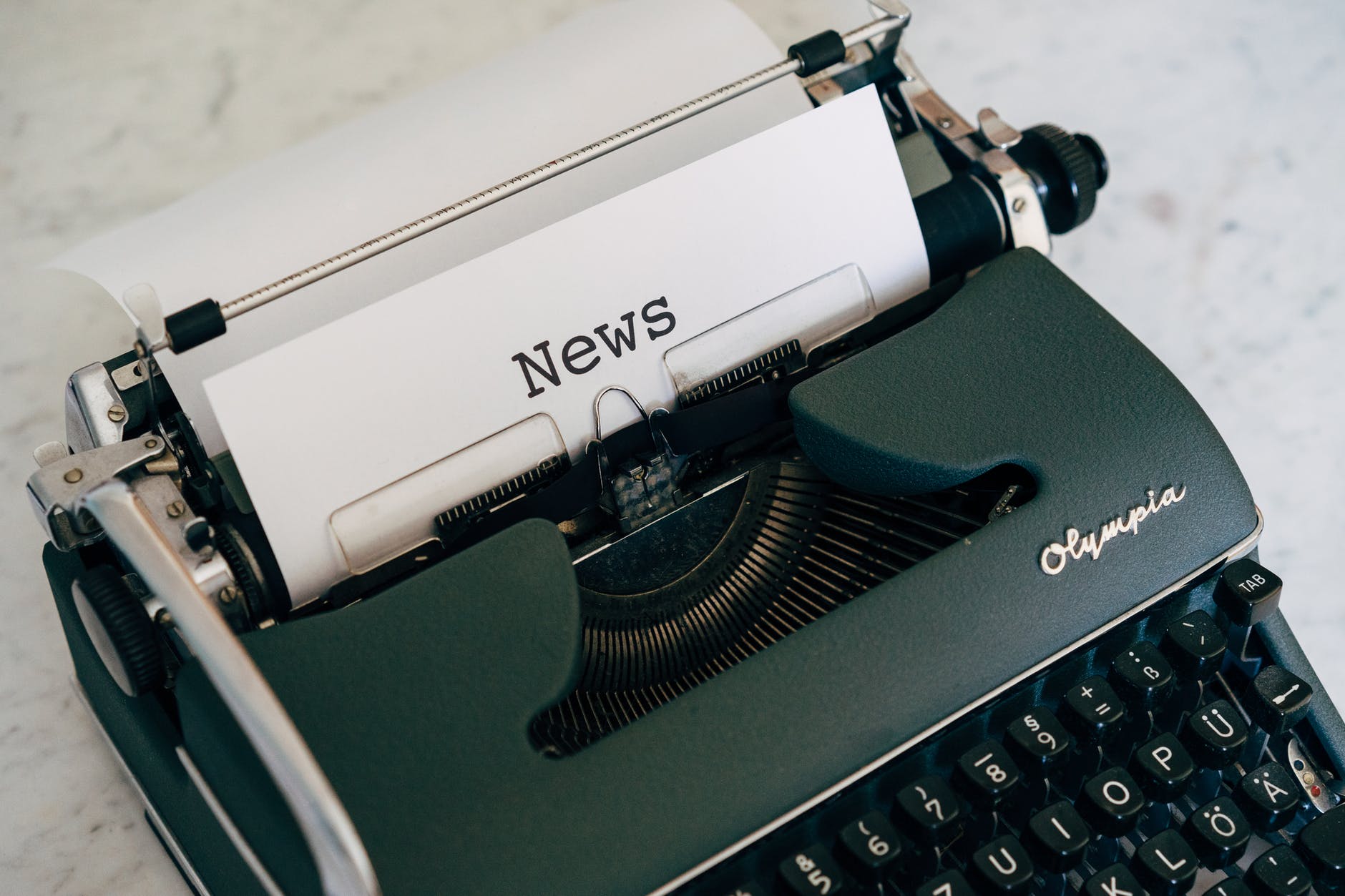
The New Journalism

Photo by Markus Winkler on Pexels.com

I love great journalism and have been a subscriber of the Economist since 2010, when I started studying at the LSE. Each week I listen to the audio version of The world this week, the Leaders, and the Britain, International, and Business sections. I also read the daily WONKHE, a higher education policy website and newsletter that keeps me somewhat informed about the sector where I work.

However, I have recently started to move away from other forms of legacy news and find new media much more informative with high-quality, more in-depth, and longer-form content. These include mini-documentaries from Economics ExplainedColdFusion, and Johnny Harris and long-form interviews from Modern WisdomTriggernometry, and of course, Joe Rogan

Johnny Harris, formally of Vox, produces beautifully edited and well-written content. He has 810,000 subscribers to his Youtube channel and regularly gets over a million views on his videos. In a recent video, he provides seven lessons he has learnt over the last seven years of journalism: 

  1. Objectivity is a myth – every piece of news is produced by a human who has chosen what to include, what to leave out, and how to frame it. Aim to be fair and generous to the other side of the argument and present the best version of the viewpoint. Be clear and balanced about the facts.
  2. A lot of journalists write for their peers, not their audience – It can be challenging for people to understand the intricate parts of the news unless you already understand the area. The audience tends to feel left out. Use clear, simple language and avoid jargon.
  3. Journalism has a lot of very old customs/traditions – be a character (use I) and tell the story to the audience include facts, data, people, and help inform the reader. Be a part of the store, and make it beautiful with the imagery and music.
  4. Journalism school isn’t always the best way to go – schools spend too much time on theory, tradition, history, and critique of the old way of doing things. They don’t leave space for students to experiment with the new direct to consumer journalism. Just make content and aim to get better at it by learning in the trenches.
  5. Journalism is economic in its very nature – journalism is a business through subscriptions, donations, or ads, which comes with incentives. Private media can get out of control with the motivation to chase volume and clicks, which does not always lead to great journalism. If you want great journalism, pay for it and be the customer, not the product.
  6. Good writing is rare and beautiful – good journalism is good writing; it should be great storytelling, clear, concise and simple in its wording. Develop your writing to develop the quality of your journalism.
  7. Good journalism is important – good journalism is hard to produce but makes a positive impact. It is precise with the facts and honest about its biases to allow the reader to scrutinise it.

Here is Johnny’s affiliate link to his suggested book for improving your writing, The Sense of Style by Steven Pinker. You can subscribe to The Economist via their website. The writing course I am working through to improve my content is Ninja Writing: the Four levels of Writing mastery by Shani Raja, a former writer and editor for the Economist. Shani also has a free course on Ubemy called Secret sauce of great writing.

Let me know your recommendations for great journalism on Twitter @samueljtanner.

Britain reduces carbon emissions

There are three core areas where Britain need to reduce carbon emissions to hit the 2030 target; electricity production, heating, and transport.

Britain is ahead of other industrialised nations. This summer (2020) no coal was burned to produce electricity for over two months. Carbon emissions from electricity generation have been reduced by 44% since 1990, according to the Department for business, energy, and industrial strategy (BEIS) while the economy has grown by 2/3 in the same period. Britain cut emissions 1.8 times faster than the EU average. The country has four remaining coal power stations, and these will all be decommissioned by 2025. 

The reduction in emissions is mainly down to the move away from burning coal to natural gas which burns half as much carbon dioxide as coal. This move started with Margaret Thatcher and the closing of mines, privatising the energy markets, and introducing the north sea oil and gas. The Labour government carried on this move with the Climate Change Act in 2008, that made Britain the first country in the world to commit itself to legally binding carbon-emission reduction. Finally, the Conservative-Lib Dem coalition introduced the Carbon Price Support in 2013 that put a carbon tax on power production that made coal with its higher emissions uncompetitive. The carbon tax has to lead to coal production, making up around 25% of electricity production in 2015 to less than 2% in 2020. Wind power currently makes up around 25% of energy production and solar around 4%.

Electricity generation is only a third of the story, and Britain is currently projected to be 10% away from its legally mandated target for carbon emissions according to the BEIS. The current government has a 10 point plan for a green industrial revolution that includes a ban on petrol and diesel cars’ production from 2030, but it has rolled back the plans for mandating all new homes be carbon neutral. For the carbon-neutral goal to be met, buildings need to replace gas boilers with heat pumps, requiring larger radiators or underfloor heating.

The UK is currently leading the industrialised world in green energy production. Still, both us as citizens, through our transport and home purchasing choices, and the government, through proper taxing of externalities like carbon emissions, need to do more to hit the target we have set ourselves. 

Vitality and Wisdom

If you want a long term goal as a direction of travel, you will struggle to find a better one than building vitality and wisdom.

Vitality [ vahy-tal-i-tee ]

noun, plural vi·tal·i·ties.

1. exuberant physical strength or mental vigor: a person of great vitality.

2. capacity for survival or for the continuation of a meaningful or purposeful existence:the vitality of an institution.

3. power to live or grow: the vitality of a language.

4. vital force or principle.

Dictionary.com 

Wisdom [ wiz-duhm ]

noun

1. the quality or state of being wise; knowledge of what is true or right coupled with just judgment as to action; sagacity, discernment, or insight.

2. scholarly knowledge or learning: the wisdom of the schools.

3. wise sayings or teachings; precepts.

4. a wise act or saying.

Dictionary.com

Vitality

Vitality, or vigour, can be summed up as staying physically young for as long as possible. Someone with vigour has energy, enthusiasm, and ‘aliveness’ and the absence of fatigue, weariness, and exhaustion. Most research attempt to measure it using a Vitality subscale as part of various medical questionnaires that include four questions: 

  • Did you feel full of pep? 
  • Did you have a lot of energy? 
  • Did you feel worn out? 
  • Did you feel tired?

The feelings of energy and aliveness are both physical and mental, linked to self-actualisation, self-esteem and self-motivation. As well as having physical strength and being free from pain, those that see themselves as having vitality also express excitement, enthusiasm, and spontaneity. The subjective element of vitality suggests that it goes much further than being physically healthy and an attitude that can be chosen and practised. 

Wisdom

The traditional interpretation of wisdom from western philosophy related to ‘knowing the truth of things’. For someone to be wise, they must have integrated knowledge, unbiased judgement, ethics, compassion, insight, and self-awareness. Psychologists mainly use self-assessment methods to measure wisdom; these suggest that wisdom is developed through life experience, openness, emotional control, and reflectiveness. The DIKW pyramid from Information theory provides a more objective view of wisdom, listing it at the top of the cognitive hierarchy. Data is processed to create information (the what), cognition is used to turn information into knowledge (the how), and finally, judgement is used to produce wisdom (the why). 

Developing vitality and wisdom

To develop vitality, you need to maintain high energy levels and avoid fatigue. Training consistently with moderation is required and keep high-intensity exhausting sessions that push you towards failure to short blocks once or twice per year. A foundation of strength and mobility is essential that is supplemented by sport and adventure.

To develop wisdom, you need to focus on gaining knowledge, applying it, and then reflecting on your decisions to build better judgement. Charlie Munger suggests starting by learning the various cognitive bias to understand better how you come to conclusions. Naval Ravikant recommends learning the basics of all the hard sciences so you can pick up any book in a library and understand it. Read, do stuff, then try to understand the outcome.

First impressions are made in a blink of an eye and can have lasting effects

I have not worn a shirt for work in 12 months. Since working from home, my wardrobe has gone toward the relaxed end of business casual. I convince myself that this is OK because I run a team of people with Designer in their job title and I make an effort to buy quality, branded, smart clothes that last. However, my premise somewhat fails when I look at my calendar and realise that I spend most of my time in video calls with people in director or management roles. Tuesdays for me are the busiest days for meetings, and so for a few weeks I started to wear a shirt each Tuesday, but two of my reoccurring committees that day ended as we moved to a new phase at the university, so my shirt-wearing ended along with the meetings.

People are much more forgiving of your presentation and other elements of professionalism once they know you than when you first meet. First impressions are made within a tenth of a second and once formed can affect the way you think of someone for over six months after you meet. First impressions can be so influential over how you feel about someone that even when presented with facts that contradict these initial feelings, your brain will side with the false first impressions.

Professionalism is the habits and norms that people see as acceptable within a field and is highly specific to an industry or profession. The variability of standards is particularly relevant for your appearance. Many design agencies would not hire someone who turned up to an interview in a suit, but it is the opposite for many corporate positions. A study found that wearing a brand named cloths has a positive effect on first impressions. Other habits, however, like turning up on time and good levels of personal hygiene are universal.

Acting professionally in the right context allows people to focus on your work skills. You do not have to change or hide your personality but making sure you don’t distract people with your appearance or grammar, this will allow them to focus on what you say and make them more open to getting to know you. Just be genuine, making an effort, and respect peoples time. 

 Quantic suggests that you pay attention to: 

  • Appearance: be neat, clean, and dressed appropriately
  • Demeanour: be confident, articulate, have good posture, and a firm handshake
  • Reliability: Show up on time and prepared 
  • Ethics: Be honest, kind, helpful, and moral.

The FIRE movement and financial independence

Wouldn’t it be great if you could tell you boss to F**k off if they start to take advantage, or you could walk out the door when work takes you down a road you do not want to go down? Wouldn’t it be great also to be an owner rather than just labour? Many more people worldwide are taking up this dream and aiming to reach this financial independence point earlier than the traditional retirement age.

The FIRE movement or Financial Independence, Retire Early is a movement started by Vicki Robin in the book Your Money or Your Life. FIRE borrows from the idea from the finance industries ‘F**k You money’ and has increased its popularity over the last ten years as investing becomes more accessible. Followers aim to maximise savings by minimising their spending, and accumulate assets that give them passive income. You achieve financial independence when the revenue generated through your assets is equal to or greater than your living expenses. At this point, you can retire and spend your time doing anything you like; you could go down to part-time, find more enjoyable work, or continue your career in the sweet knowledge that it is by choice and not by necessity that you clock in each day.

The goal is to reach the point of not having to work as early in your life as possible. This presents a trade-off between your future security and your current lifestyle. The more you save, the quicker you reach independence, but this requires you to live far below your means and forfeit many of these things that might make life more enjoyable like a lovely house, extensive international travel, and other experiences. Your definition of financial independence is ultimately up to you; you might decide that you want to have three, five, or ten years worth of living expenses rather than the idea of never working again. It is a journey, and your definition will evolve along with your earning potential and your taste for the finer things.

Step one is to start to save. You should begin by putting away 10% of your income into an investment account, so you start your journey from labour to an owner-labourer. Depending on your situation, 10% might be tough but commit to working up to that amount and make sacrifices with some creature comforts. If you work for a publicly-traded company, buy at least one share so the next time you walk through the door, you can smile and know you own a part of the company, it will start to change your mindset.

The road to El Dorado; the mountains and disposition

When asked why they are studying for a degree, most students answer that they want a good job, lots of money, financial security or something similar. When questioned further students usually have a deeper purpose, usually around making the world a better place through a job that reflects their interests; solving climate change, curing cancer, making people happy through music, looking after animals etc. Quite often, deciding what and where to study comes down to a mixture of these two things.

There are two ways to think about studying, the first is learning to do, and the second is learning to learn. Learning to do, commonly called ‘training’ provides skills to use the current technologies to complete set tasks. These skills are essential in getting a job and adding value quickly to the employer. However, learning to learn is the ability to think critically and adapt to new technologies and emerging problems. These skills are much more critical longer-term and in adding value to society over a career.

The mountains and disposition

My Introduction to Economics Professor at university, Amos Witztum, told a story on my first day of class. He compared the journey we were starting on, studying for a degree, to the search for El Dorado, the fabled city of gold. He said that you needed to learn how to walk and then train to walk long distances to prepare yourself. 

This training will help you be strong enough for the journey, but if you start climbing and all you know is to walk, you will not get very far. You need to raise your head and look around, and you need to learn how to navigate and route find. When you get to the top of the first mountain and see the next, much bigger, mountain, you need the strength to keep going. Learning to learn will help you find the city of gold at the end of the adventure. 

Discipline and motivation are dependent on your own expectations.

Amos Witztum

He ended with some advice. He said that you might be standing atop a mountain, scanning the horizon, along the way in your search for gold and see some new and undiscovered treasure. In your search for an assumed goal, you may find something more extraordinary and change your path. Keep your head up and don’t get too focused on the destination that you miss out on the treasure along the journey.

Have a big audacious goal but if on the journey you discover some other riches, seize the day. More importantly, in the absence of your own dream, don’t be worried about picking one that others see as worthy, and work on improving your ability to think and learn, and be ready to pivot when you discover your own path to greatness.

You can watch a version of the speech given by Professor Witztum on Youtube. It is a later year, so it is not exactly the talk that inspired me but worth fifty-three minutes and twenty-six minutes for the knowledge and wisdom. 

Economics is not a science, it is a language, and without it, you can’t be a part of the conversation.

Amos Witztum

30 minute clean

Dan John suggests in most of his books to have a cleaning routine and a cooking menu. The John house routine includes a set day for specific tasks like Monday for white laundry, Tuesday for black laundry etc. to free up headspace for work and thought. If you need scientific studies to prove that having a clean home is good for you, there are many, but as David Allen describes in Getting things done, you should do everything you can to reduce the background noise in your head to focus your attention on the task at hand. Having set days for specific chores does that.

For the last month or so I have used Saturday mornings for a two-hour ride on Zwift and then a quick clean of the house, mainly sweeping and washing the wood floors downstairs and vacuum the stairs and the rooms upstairs. I found a list for how to clean your entire home in 30 minutes on the Art of Manliness website and thought I would use it to add to my Saturday morning cleaning routine.

Saturday morning cleaning routine

  1. quickly organise each room you visit
  2. bathroom: spray all surfaces including the toilet leave to soak
  3. spot clean kitchen
  4. Wipe and dust all surfaces downstairs
  5. Vac all carpets
  6. Sweep, and wash wood floors
  7. make the bed, put away loose items, put laundry in the basket, and clean bedroom, 
  8. Return to the bathroom and scrub
  9. Take out bins

It took me 60 minutes to complete the ’30-minute’ routine this morning, and my wife did most of the bathroom. Yes, I did use a stopwatch, and yes, next week I will be quicker.