Owning a Kindle has increased my reading significantly; I advise everyone to get one to read in bed before sleep. Last night, I finished the book Why Die? The Extraordinary Percy Cerutty, ‘Maker of Champions’. It is a biography of the famous and controversial Australian running coach from the 50s and 60s.
…through a program of violent physical exertion, a diet of natural foods, alternative theories of medicine and the forensic examination of his inner life, sculpted it into an organism capable of sublime physical expression. Graem Sims
Cerutty’s Stotan lifestyle was based on the ancient Greeks stoic philosophy and spartan physical training. He saw modern urban life and office work as emasculating men and removing their emotion and passion. The only solution for men to rediscover their true nature and thrive was to respect their bodies and seek to perfect them.
Percy viewed running as a purifier of the soul and the ultimate physical expression. He often told his athletes to conjure up primitive fight or flight responses to maximise performances in races and valued effort above all else. Although known for producing some of the greatest milers in history, he advocated running long distances on trails and in the wild to reconnect with nature and push the body to its limits.
This book is full of great lessons, deep thoughts, and self-sabotage collected around the colourful life of a true character. His message is as important today as it was in the 1960s; Re-educate yourself, lift weights, eat real food, run a lot, climb mountains, sprint up dunes, swim in the sea, read widely, write a lot, and most of all live a life of freedom and adventure.
At the start of the year, I aimed to get serious about my running. I have been running on and off for around five years, but I have never done anything more than 30+ miles in a training week and never followed a programme or put in any consistent volume. I completed several big races including the 69 mile Rat Race Wall in northern England, the 66km long, 4,400m of accent, Pirin Skyrun in Bulgaria, and the 49km long, 3,600m of accent Matterhorn Ultraks with my relaxed approach. Still, the aim has always been to finish rather than to race.
I decided in December 2019, with the help of a Percy Ceritty book, that if I was going to invest time and energy into doing long mountainous races, then I need to respect them by preparing correctly. I chose the Tromso Skyrun, a beautiful and remote event on the edge of my current ability as my target race and set about getting serious. I set an annual target of 2000 miles and got the five times winner of the event to coach me for the six months leading up to the event (The organisers cancelled it in the end). Jon Albon helped me build a strong running foundation, so after the six months under his coaching ended, I wanted to create my plan for the rest of the year.
Decide on appropriate running volume, frequency and weekly workout structure.
Divide your plan into introductory, fundamental, and sharpening periods
Plan your peak training week
Schedule tune-up races and recovery weeks
Schedule progressions for intervals workouts, threshold workouts, and long runs
Fill the rest of the schedule
For most people, picking a race and a goal for it in step one is going to be based on an event that gets them excited, but if you are looking for inspiration, check my post from Sunday last week on the progression of a distance runner.
If you want to get faster at running and do not have a coach, you should pick up a copy of Brad Hudson and Matt Fitzgerald’s book. The book is full of useful advice, training plans, and more importantly, guidance on how to adapt a plan for your context and how you react to the training load on a day to day basis.
Contact me on Twitter if you have any questions or want to discuss ideas creating your own running training plan.
This year is the first year I have taken running seriously. In previous years, I have done some significant challenges, including Sky runs, ultramarathons, and 70.3 Ironman triathlons. I am not a naturally fast runner, I have done ok at the longer events, but I have not been fast, and not fully committed to the training so I never got near to seeing how good I could be.
This year I committed to becoming a better runner. I signed up for the Tromso Skyrun and several warm-up events, I convinced the five-time Tromso winner and OCR world champion Jon Albon to coach me, and set an annual distance target of 2000 miles (over twice the total I had done in the year before).
For the first month of the year, I built up to 40 miles per week and then ran a local half marathon event in early February, setting a slow 1:50 minutes, and a 48 minute 10K time trial solo on local roads. With these benchmarks set, I began working with Jon to build intensity in 2-3 runs per week and then slow down the rest of my running to comfortable distance pace. Events had been cancelled, but I managed to get my Half-marathon time down to 1:37 in a solo time-trial before my time with Jon ended.
The lack of events got me thinking about the progression of a distance runner. What benchmarks should I target at each stage of my training to keep it interesting? I started to look through books and read online about some targets to direct my training towards achieving.
The progression of a distance runner
The term distance running tends to cover events from 5km to Marathon. traditionally younger competative runners would start at the shorter distances, get fast, and then work up to the marathon later in thier career but as I am in my 30s already I can be a bit more created with my running progression. Run Britain have programmes for the following distances and target times. On their website, they list the events by distance, but I wanted to order them based on difficulty to create a ladder of events to target. I have listed these distance and time benchmarks in order of difficulty according to the equivalent race time tool of the Jack Daniels calculator:
10k in under 60 minutes
Marathon in under 4 hours
5k in under 24 minutes
10k in under 50 minutes
Half-marathon in under 95 minutes
10k in under 40 minutes
Marathon in under 3 hours
Half-marathon in under 85 minutes
5k in under 18 minutes
On the 20th December, I am going to time trial a half marathon to get under the 1:35 time. I had planned to do this in an event, but this has cancelled too. I have been following a Half marathon programme from Brad Hudson’s ‘Run Faster’ and can highly recommend this book and its included programmes.
Contact me on Twitter if you have an alternative set of targets that make training more exciting or to share your running progress. I am back to work tomorrow after a week off so the next few days will be focused on Learning Design. I will keep Sundays for running-related blogs.
I like to do my heaviest lifting on a Saturday, It is currently my rest day from running, and it allows me not to rush the rests between heavy sets of deadlifts or bench press as I tend to have less going on. I have been building up a home gym over the last few years and makes Saturday workouts even more straightforward. Ever since I moved into a house with a garage, I have picked up a second-hand gear including a barbell and bumper plates and have taken advantage of sales to pick up smaller items including kettlebells.
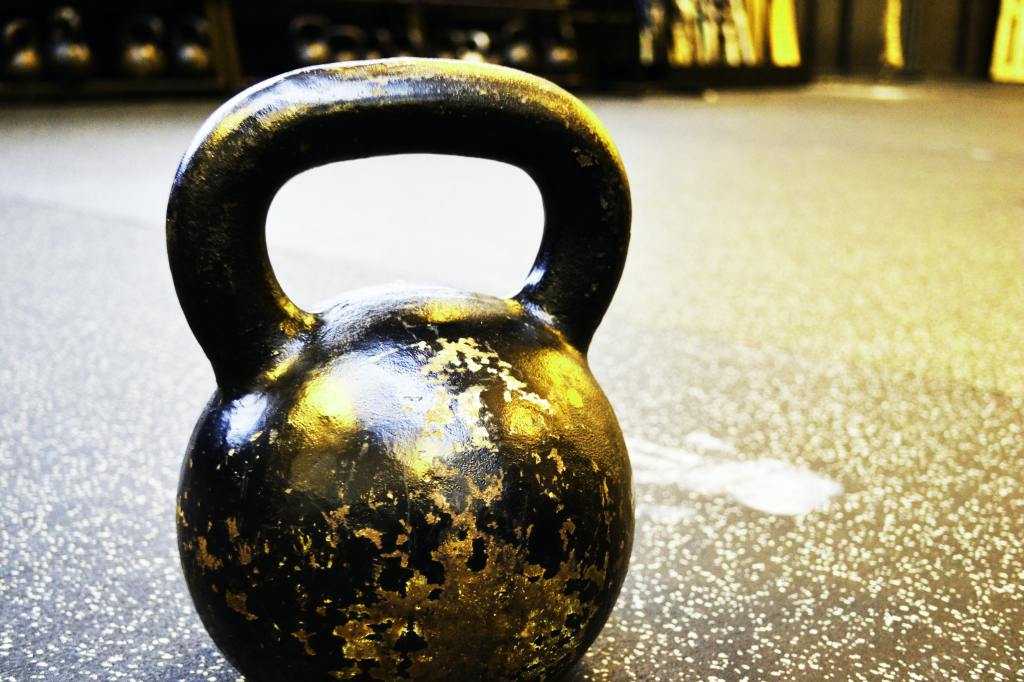
Gyms have been closed in the UK for most of the last seven months, leaving many people unable to train. I have been suggesting a simple kettlebell workout and progression from the Deadlift legend Andy Bolton that can be completed in 10-15 minutes (just 1% of your day) that I found in Ross Edgley’s ‘Fittest book in the world’. I tried the programme two years ago when I was getting back into strength training after preparing for an ultramarathon and found it quick, easy, and useful.
The ladder
Day 1: 5 swings every minute on the minute for 5 minutes.
Day 2: 6 swings every minute on the minute for 5 minutes.
Day 3: 7 swings every minute on the minute for 5 minutes.
Day 4: 8 swings every minute on the minute for 5 minutes.
Day 5: 9 swings every minute on the minute for 5 minutes.
Day 6: 10 swings every minute on the minute for 5 minutes.
Day 7: 10 swings every minute on the minute for 6 minutes
Day 8: 10 swings every minute on the minute for 7 minutes
Day 9: 10 swings every minute on the minute for 8 minutes
Day 10: 10 swings every minute on the minute for 9 minutes
Day 11: 10 swings every minute on the minute for 10 minutes – 100 swings total in 10 minutes!
Day 12: either get a heavier bell and start back at day one or if you are not ready to make the jump to the next size, start the ladder again but cut the time in half so every 30 seconds rather then every minute.
Which Kettlebell?
Start with a 16kg kettlebell, then progress to a 24kg, then 32kg, then 40kg, and finally ‘The Beast’, at 48 kilograms. The big jumps shock the body to encourage growth. It can be tempting to make smaller jumpers, so 20kg for your second kettlebell but you will quickly outgrow it, and you will end up spending more money than you need. Many people are happy with just 16kg, 24kg, and 32kg Kettlebells and never feel the need to go heavier. If you do choose to go heavier, 100 swings with the 48kg kettlebell in 10 minutes represents an impressive level of strength and conditioning so send me a video on Twitter if you manage it (I have completed the ladder with a 32kg bell and have ordered a 40kg).
Ideas on how to do it
The beauty of the workout is its simplicity, train when you can and gradually work up the ladder until you complete it with your current weight. I have included some suggestions of how you might want to get started for those that what extra help.
When you start, especially with the 16kg bell, and depending on your level of fitness, you could probably do the workouts five days per week, skipping a day when you are too busy. As you get further up the ladder and the bells get heavier, you will need to add more rest days or start to introduce different exercises on the days do not swing. For example, once you reach the 32kg you might do your swings on Saturday, Monday, and Wednesday, then go for a run on Sunday, Tuesday, and Thursday. If you need to keep your workouts short, you could introduce some overhead pressing or snatches with the 16kg bell on the non-swinging days.
Don’t be stupid
I am not a qualified doctor or fitness professional and you are swinging a cannonball with a handle around so do this at your own risk. If it hurts stop, and if you are injured, wait to recover before you start. Check out Ross Edgely’s book for more ideas on getting fit and lookup Strongfirst on their website or on youtube for all things kettlebells including technique, different programmes or to find a certified coach.
Get high quality coated kettlebells; if you look after them they will last a long time, probably longer than you will, so it is worth paying an extra £30 to get something that has a smooth and even handle. You get what you pay for! Brands that make high quality coated Kettlebells and sell in the UK include Bulldog gear, Primal Strength, Strength shop, and Again Faster. Rogue Fitness for everywhere else in the world.
Find me on Twitter if you have questions or if you have a go and want to share the results.
One of the best stretches you can do is to dead-hang from a bar. According to John M. Kirch, one of the worlds leading orthopaedic surgeons, hanging for 30 seconds three times per day can cure or prevent 99% of all shoulder pain. Hanging from a bar will open up the shoulder joint, improve mobility and strengthens the shoulder.
Kirch came to this conclusion by noticing the similarity of the human’s shoulder join to that or the great apes. These apes still brachiate; hand and swing from trees, and adapting this practice into our own lives will allow the shoulder to do what it is designed to do.
If you were chased by a tiger up a tree, the muscles you use to hang on to the branch for a long time are tonic muscles. If you decided to chase a deer and throw rocks, you would use your phasic muscles.
Dan John
Regular hanging can help with hunched over posture too. Doctor Vladimir Janda, a neurologist and exercise physiologist, when studying posture separated muscles into two groups; tonic muscles that shorten with age and phasic muscles, which weaken with age. The tonic muscles include By stretching the tonic muscles and strengthening the phasic muscles; we can improve posture and reduce the likelihood of pain from long hours of sitting hunched over a laptop or slumped on a sofa.
Working on a University campus, I used to spend a lot of time walking between buildings for meetings and would regularly hit 10,000 steps without thinking about it. At the time of writing, I have been working from home for the last seven months. All my meetings are video calls in front of a computer in my spare bedroom with no forced transit every 50 minutes. With walking no longer a natural part of my day, and spending most of my working day sitting down with less than graceful posture, I have had to find ways to introduce physical activity and stretching to the natural gaps.
Adding it to my routine
For every day I work from home I am finding three times when I can hang from a door mounted pull up bar I bought from Amazon for less than a week’s worth of petrol. In an ideal world, I aim to do the first 30-second hang when I wake up, the second when I break for lunch to get the 4-5 hours of sitting in front of a computer out of my back, and the final 30 seconds when I finish in the evening to stretch off the day. The reality is messier, and I stopped using a timer after the first few days and go off feel and grip strength. The main thing is I am stretching regularly and can feel the difference in my back, chest, and posture.
Try the dead-hang for better posture and shoulder health
Grab a pull up bar, monkey bars, a tree branch, or anything else you can hang from with an overhand grip around shoulder-width apart and hang, allowing your shoulders to relax completely. If your grip can’t take 30 seconds straight away, do what you can and gradually work up to 30 seconds. Alternatively, you can rest your feet on a bench or the floor and use your legs to take some of the weight, gradually reducing the amount of weight until you can do 30 seconds hanging unaided.

 SamuelJTanner